
Planning a multi-city trip to China takes more than choosing which attractions you want to visit. Between international flights, domestic transportation, accommodations, sightseeing, and advance reservations, there’s a lot to organize.
When we traveled to China in October, I created a detailed itinerary that brought everything together in one document. Our trip combined business visits with sightseeing, taking us through several cities and provinces over approximately two weeks.
In this guide, I’ll share how I organized our itinerary, the route I chose, and the planning process I followed. You can use our itinerary as inspiration or follow the same steps to create an entirely different trip.
This blog focuses specifically on building and organizing your itinerary. I’ll be sharing separate destination guides covering what we did in each location, how we got around, accommodations, attractions, and everything in between.
If you’re just getting started, read my How to Plan a Trip to China: Complete First-Timer’s Guide first. It covers visas, choosing destinations, essential apps, payments, and other preparations you’ll want to complete before your trip.
1. Start With Your Destinations and Travel Route
Before creating a day-to-day itinerary, the first step is deciding where you want to go, how long you have, and which destinations make sense to visit together.
What You Need to Do
| Step | What to plan |
|---|---|
| 1. Choose your travel dates | Decide when you want to travel and how many days you have available. |
| 2. Research international flights | Compare arrival and departure airports, prices, and flight schedules from your starting destination. |
| 3. List your destinations | Write down every city or region you’re interested in visiting. |
| 4. Prioritize your destinations | Separate must-visit locations from places you’d like to visit if time allows. |
| 5. Estimate days per destination | Consider attractions, travel time, and how much you want to experience. |
| 6. Organize your route | Arrange destinations geographically to reduce unnecessary backtracking. |
| 7. Choose your arrival and departure cities | Determine whether flying into one city and leaving from another makes more sense than returning to your starting point. |
How I Planned Our Route
I started by determining how much time we wanted to spend in China and which destinations were priorities.
The first part of our trip was primarily business-related, including manufacturer visits and attending the Canton Fair. Because these commitments were scheduled for specific days, I organized the rest of our route around them.
Once our business visits were accounted for, I added destinations we wanted to explore, including Zhangjiajie, Chongqing, and Beijing.
I also needed to consider our international flights. We flew from Orlando to Hong Kong, connected onward to Nanjing, and returned to Hong Kong at the end of the trip for our flight home.
Our China Itinerary at a Glance
| Destination | Time allocated | Main focus |
|---|---|---|
| Florida → Hong Kong → Nanjing | Travel / Day 1 | International arrival and onward flight |
| Nanjing | 2 days | Business meetings and time in the city |
| Shaoxing | ½ day | Manufacturer visit |
| Guangzhou | Approximately 2 days | Canton Fair and business activities |
| Shenzhen | ½ day | Manufacturer visits |
| Zhangjiajie | 2 days | Tianmen Mountain and Zhangjiajie National Forest Park |
| Chongqing | 2 days | City sightseeing, food, and attractions |
| Beijing | 2 days | Historical sites and the Great Wall |
| Hong Kong | 1 day | Ngong Ping cable car and Lantau Island |
| Hong Kong → Florida | Departure day | International flight home |
Helpful Tips
- Research international flights before finalizing your route. Sometimes flying into one city and out of another can save time, even if the ticket costs more.
- Check the distance between destinations before deciding how many cities to include.
- Consider travel days separately from sightseeing days, especially when flights or trains take several hours.
- If you have appointments, tours, or events on fixed dates, build your itinerary around those first.
- Avoid trying to fit too many destinations into a short trip. It’s better to have enough time to enjoy each location than spend most of your vacation in transit.
2. Research Transportation Between Destinations
Once you’ve decided on your route, the next step is figuring out how you’ll travel between cities.
China has an extensive high-speed rail network and numerous domestic flight connections. Depending on the distance, one option may be significantly more convenient than the other.
What You Need to Do
| Step | What to research |
|---|---|
| 1. Compare transportation options | Check available flights and high-speed trains between each destination. |
| 2. Compare total travel time | Include airport or station transfers, security, boarding, and luggage collection. |
| 3. Identify departure and arrival stations | Some cities have multiple airports and train stations located far apart. |
| 4. Check transportation to your hotel | Determine how long it takes to reach your accommodation after arriving. |
| 5. Consider your daily schedule | Choose departure times that leave enough time for activities or sightseeing. |
| 6. Add everything to your itinerary | Record the transportation method, departure location, estimated travel time, and booking status. |
How We Traveled Between Cities
We used a combination of flights and high-speed trains throughout our trip.
| From | To | Transportation |
|---|---|---|
| Florida | Hong Kong | International flight |
| Hong Kong | Nanjing | Flight |
| Nanjing | Shaoxing | High-speed train |
| Shaoxing / Hangzhou area | Guangzhou | Flight |
| Guangzhou | Shenzhen | High-speed train |
| Shenzhen | Guangzhou | High-speed train |
| Guangzhou | Zhangjiajie | Flight |
| Zhangjiajie | Chongqing | High-speed train |
| Chongqing | Beijing | Flight |
| Beijing | Hong Kong | Flight |
| Hong Kong | Florida | International flight |
I chose transportation based on how it fit into our overall schedule, not just the shortest advertised journey.
For example, a train journey might take only a few hours, but if the station is far from your hotel, you’ll need to account for that additional travel time. The same applies to flights, especially when airports are located outside the city center.
My transportation tip: Amap was one of the most helpful tools I used when planning. It allowed me to research actual distances, routes, and estimated travel times between locations in China.
I used it not only to compare transportation between cities but also to check the distance from airports and train stations to our accommodations and attractions.
3. Choose Accommodations Based on Your Itinerary
After deciding how we would travel between destinations, I focused on choosing accommodations.
Where you stay can make a big difference in how much time you spend getting around each day.
What You Need to Do
| Step | What to consider |
|---|---|
| 1. Identify your main attractions | Find the areas where you’ll spend most of your time. |
| 2. Research convenient neighborhoods | Look for locations near your planned activities or transportation. |
| 3. Check airport and train station distances | Make sure arrival and departure transfers are manageable. |
| 4. Compare accommodations | Consider location, price, amenities, and guest reviews. |
| 5. Add hotel information | Record the address in English and Chinese, check-in dates, and booking details. |
How I Chose Our Hotels
I based our hotel choices primarily on convenience.
In Chongqing, we stayed near Jiefangbei, which made it easier to explore several attractions in the surrounding area.
For Beijing, I chose accommodations that gave us access to the city while allowing us to arrange transportation for our Great Wall excursion.
In Hong Kong, we stayed in Tung Chung because we wanted to visit Ngong Ping and needed convenient access to the airport for our flight home.
Helpful tip: Don’t choose a hotel based only on its distance from the city center. Consider where your specific activities are located and how easily you can travel between them.
4. Build Your Day-to-Day Itinerary
Once I had our route, transportation, and accommodations organized, I started planning what we wanted to do each day.
This was the most detailed part of our itinerary because we wanted to have a clear plan for each destination without constantly researching directions or attractions during the trip.
What You Need to Do
| Step | What to plan |
|---|---|
| 1. Research attractions | Make a list of everything you want to see and do. |
| 2. Prioritize activities | Identify must-see attractions and optional stops. |
| 3. Group nearby locations | Organize attractions by neighborhood or geographic area. |
| 4. Arrange the order | Create a route that avoids unnecessary backtracking. |
| 5. Estimate time at each stop | Consider how long each activity takes and transportation between stops. |
| 6. Check hours and reservations | Confirm operating hours, admission requirements, and available time slots. |
| 7. Add meals and breaks | Leave enough flexibility to enjoy the day. |
How I Organized Our Daily Activities
For each destination, I started by researching attractions and experiences we wanted to include.
I then used maps to group nearby locations together and determine the most practical order to visit them.
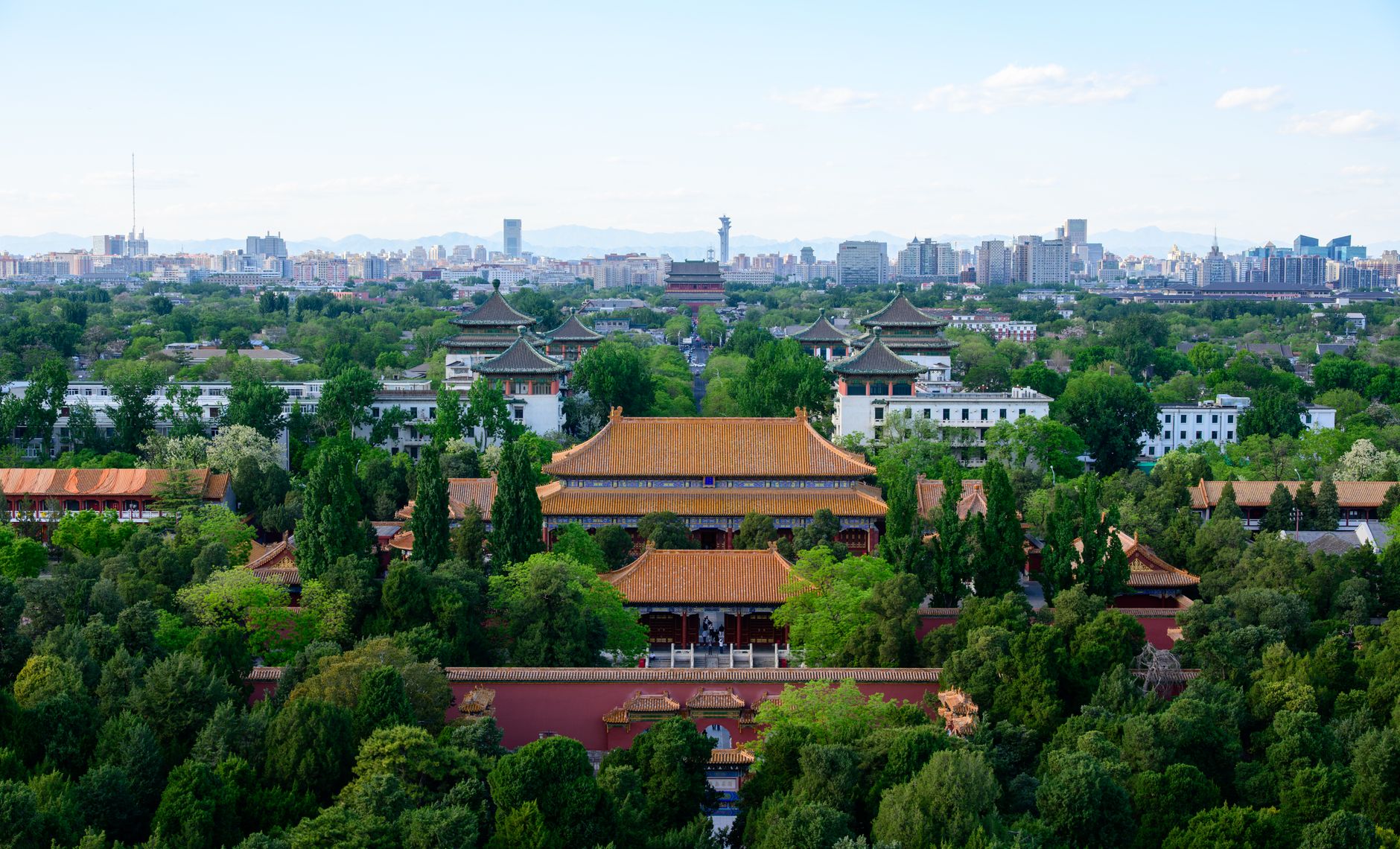
For example, in Beijing, I planned Tiananmen Square, the Forbidden City, and Jingshan Park together because they’re located close to one another.
Our Beijing Day Itinerary
| Stop # | Location | What we’re doing | Transportation |
|---|---|---|---|
| 1 | Hotel | Arrive and drop off luggage | Airport transfer |
| 2 | Tiananmen Square | Explore the square | Metro or DiDi |
| 3 | Forbidden City | Visit the palace complex | Walk |
| 4 | Jingshan Park | Enjoy views overlooking the Forbidden City | Walk |
| 5 | Wangfujing | Shopping, exploring, and dinner | DiDi or metro |
| 6 | Hotel | Return for the evening | DiDi or metro |
I followed this same process for each destination, adjusting the schedule based on the activities we wanted to experience.
For locations like Zhangjiajie, I also researched the different entrances, cableways, elevators, and transportation options within the parks before deciding on our daily routes.
Helpful tip: Always check whether an attraction has multiple entrances or exits. This can make a significant difference when planning the order of your stops.
5. Organize Everything Into One Travel Document
After researching our destinations, I created a Google Doc to keep all our travel information in one place.
Our document started with an overview of the trip, including transportation between destinations, a daily calendar, a general checklist, and a separate activity-booking schedule.
I then created individual pages for each day.
How I Structured Each Daily Itinerary
| Stop # | Location | What we’re doing | Address / Map Search | Transit / Notes |
|---|---|---|---|---|
| 1 | Hotel | Check in or drop off luggage | English and Chinese address | Airport or train station transfer |
| 2 | Attraction | Main activity | English and Chinese address | Transportation and estimated time |
| 3 | Restaurant or attraction | Lunch or sightseeing | English and Chinese address | Walking, metro, or DiDi |
| 4 | Next attraction | Continue sightseeing | English and Chinese address | Tickets, reminders, or other notes |
I numbered each stop, added a brief description of what we planned to do, and included transportation information to make following the schedule easier.
I also saved addresses in both English and Chinese, which was particularly helpful when searching for locations in maps or using transportation apps.
Transportation Flow
At the bottom of some daily itineraries, I included a simple transportation flow to visualize the order of our stops.
For our day exploring central Beijing, it looked like this:
Hotel → Tiananmen Square → Forbidden City → Jingshan Park → Wangfujing → Hotel
This made it easy to understand the day’s route without having to read through the entire itinerary.
I also organized our Google Doc into separate tabs for the overview, each travel day, and our packing list. This made it easier to navigate without scrolling through one long document.
6. Create a Booking Checklist and Activity Calendar
One of the most important parts of our itinerary was keeping track of what needed to be booked and when.
Some attractions can be reserved well in advance, while others have shorter booking windows. I created two separate sections in our document: a general checklist and an activity-booking calendar.
General Trip Checklist
Our main checklist included everything we needed to complete before leaving.
| Done | Item | When to arrange |
|---|---|---|
| ☐ | Check passport and visa requirements | Early in planning |
| ☐ | Book international flights | Once travel dates are selected |
| ☐ | Confirm destination route | Before booking intercity transportation |
| ☐ | Book accommodations | After deciding where to stay |
| ☐ | Arrange domestic flights and trains | Based on booking availability |
| ☐ | Research attractions and daily routes | During itinerary planning |
| ☐ | Set up Alipay, WeChat, DiDi, and maps | Before departure |
| ☐ | Save important addresses in English and Chinese | Before departure |
| ☐ | Confirm airport transfers and private drivers | Before each scheduled transfer |
| ☐ | Prepare packing list and travel documents | Before departure |
Activity Ticket Booking Calendar
I created a separate calendar for attractions that required tickets or reservations.
Rather than simply noting that we wanted to visit an attraction, I recorded when to check availability and what needed to be booked.
| When to book / check | Activity | Visit day | What to do |
|---|---|---|---|
| When tickets become available | Zhangjiajie National Forest Park | Day 8 | Confirm park admission and internal transportation |
| When reservation window opens | Tianmen Mountain | Day 7 | Select route and preferred entry time |
| When reservation window opens | Forbidden City | Day 11 | Reserve admission for the planned visit |
| Before excursion | Great Wall | Day 12 | Arrange admission and private transportation |
| Based on weather and availability | Ngong Ping 360 | Day 13 | Check cable car tickets and operating conditions |
This is a simplified version of our planning calendar, not a list of current ticket release dates. Always verify booking windows when planning your own trip.
Keeping this separate from our daily itinerary made it easier to track reservations without cluttering the schedule.
Helpful tip: Add important booking dates to your phone calendar with reminders. This is especially useful for attractions with limited availability or specific entry times.
7. Leave Room for Flexibility
Even with a detailed itinerary, I made sure to leave some flexibility in our schedule.
I identified which activities were priorities and which could be adjusted depending on the weather, available time, or how we were feeling.
For destinations with outdoor activities, such as Zhangjiajie and Hong Kong, I also researched alternative options.
Having a plan made it easier to make adjustments without starting from scratch.
The goal isn’t to schedule every minute of your trip. It’s to organize the important details so you can spend more time enjoying your destination.
8. Download Our Travel Itinerary Planner
To help you organize your own trip, I’ve created a blank version of the itinerary planner based on the format I used for China.
The template includes:
- A trip overview and destination route planner
- International and intercity transportation planning
- Accommodations and local transportation
- A general travel preparation checklist
- An activity-booking calendar
- A daily itinerary page you can duplicate for each day
- A packing checklist
[DOWNLOAD THE FREE TRAVEL ITINERARY PLANNER] To edit, go to file, make a copy and you are good to start planning!
Add your own destinations and customize it to fit your trip.
Final Thoughts
Planning our China itinerary took quite a bit of research, but organizing everything in one place made traveling between multiple destinations much easier.
Starting with our overall route, then working through transportation, accommodations, daily activities, and reservations helped me build a schedule that made sense for the time we had available.
Whether you’re following a similar route through China or visiting completely different destinations, you can use the same process to create an itinerary that works for you.
In my upcoming China travel guides, I’ll go into more detail about each destination we visited, including what we did, where we stayed, transportation, attractions, and recommendations for planning your own visit.