

Travel information updated November 2026. Visa requirements, airport restrictions, and attraction booking policies may change. Always verify current requirements before traveling.
Planning your first trip to China can feel overwhelming, especially when you’re trying to visit multiple cities or provinces, navigate unfamiliar transportation systems, and figure out everything from visas to mobile payments. Unlike some destinations where you can book a flight and figure out the rest when you arrive, China is a country where a little extra preparation can make a huge difference.
We spent several months planning our October trip, which combined business meetings, factory visits, and sightseeing across China. With so many destinations spread across different provinces, we had to carefully organize our route, accommodations, transportation, and activities while leaving enough flexibility to enjoy each location.
After experiencing China firsthand, I can honestly say that many of the things we initially worried about turned out to be much easier than expected. From helpful hotel staff to convenient mobile apps and an impressive transportation system, traveling through China was an incredible experience. In this guide, I’ll share everything we learned while preparing for our trip, what to pack, which apps you’ll need, and the things I wish I’d known before visiting.

Table of Contents
- Planning a Trip to China
- How Far in Advance Should You Plan a Trip to China?
- Deciding How Long to Visit China
- Choosing Which Cities to Visit
- Best Time to Visit China & Public Holidays
- Planning Our Route Through China
- Building Our Day-to-Day Itinerary
- Creating a Booking Timeline
- China Visa Requirements and How to Apply
- Tourist Visa (L Visa)
- Business Visa (M Visa)
- Step-by-Step Chinese Visa Application
- What to Prepare for Your Visa Application
- Important Things to Know Before Visiting China
- Language and Communication
- Internet Restrictions
- China Is Primarily Cashless
- Traveling Between Mainland China and Hong Kong
- Budgeting, Hotels, Transportation, and Activities
- Creating a Travel Budget
- Booking Accommodations
- Booking Transportation & Attractions
- Essential Apps to Download Before Arriving
- Money and Payments in China
- Setting Up Mobile Payments
- Credit Cards and Cash
- Internet Access and Staying Connected
- What to Pack for China
- Clothing & Weather
- Toiletries & Personal Items
- Electrical Outlets & Voltage
- Medications & First Aid
- China Packing Checklist
- Airport Security, Customs, and Arrival Procedures
- Power Banks & Portable Chargers
- Liquids, Hand Sanitizer & Other Restricted Items
- Checked Baggage Screening
- Customs & Immigration
- Tips and Things to Know While Traveling in China
- Public Restrooms & What to Bring
- Don’t Be Afraid to Ask for Help
- Keep Your Phone Charged
- Food, Drinking Water & Everyday Essentials
- Save Addresses in Chinese
- Keep Your Passport Accessible
- Allow Extra Time at Transportation Hubs
- Ask Your Hotel for Assistance
- Be Prepared for Changes in Weather
- Understand How Reservations Work
- Be Flexible With Your Plans
- Final Preparation Checklist
- What I Would Do Differently
- China Travel Planning Checklist and Calendar
- Final Thoughts
1. Planning a Trip to China
How Far in Advance Should You Plan a Trip to China?
One of the biggest things I learned while preparing for China is that planning a multi-city trip takes time. Between researching destinations, understanding transportation options, coordinating accommodations, and booking attractions, I spent several months putting our itinerary together.
Our trip was a combination of business and pleasure, which added another layer of planning. We needed to work around scheduled business commitments while making time for the destinations we wanted to explore.
If you’re visiting just one or two cities, planning may be relatively straightforward. However, if you’re hoping to travel across several provinces, I highly recommend beginning your research at least six to 12 months in advance. This gives you time to understand the distances between destinations, compare transportation options, and determine how much time you realistically need in each location.
Deciding How Long to Visit China
China is a massive country, and the amount of time you’ll need depends on how many destinations you want to visit and what you plan to do in each.
When deciding on your trip length, consider travel days, sightseeing, and how frequently you’re comfortable changing accommodations. Even a short flight or train ride can take up a significant portion of the day once transfers and check-in are included.
Choosing Which Cities to Visit
With so many destinations to choose from, narrowing down which cities to visit can be challenging. I recommend starting with the places you’re most interested in and researching the attractions and experiences each offers.
Once you have a list, consider which destinations can realistically fit into your available time. Rather than trying to visit as many places as possible, focus on creating an itinerary that gives you enough time to enjoy each location.
Best Time to Visit China & Public Holidays
When planning your trip, it’s important to consider China’s public holidays and peak travel seasons. Major holidays such as Chinese New Year (January/February) and Golden Week (October 1–7) are among the busiest travel periods, with increased crowds, higher accommodation prices, and greater demand for transportation and attractions.
Spring (April–May) and autumn (September–October) are generally popular times to visit because of the milder weather in many regions. However, weather varies significantly across China, so research the best season for your specific destinations.
Travel Raven Tip: If possible, avoid traveling during major Chinese holidays, especially when visiting multiple cities. If your dates overlap with a holiday, book transportation and accommodations early.
Planning Our Route Through China
After choosing your destinations, the next step is figuring out the most efficient route between them.
China’s size makes this especially important. Research available flights and high-speed trains, compare travel times, and consider whether it makes more sense to arrive and depart from different cities.
Planning your route before booking accommodations can help prevent unnecessary backtracking and wasted travel time.
Building Our Day-to-Day Itinerary
Once your route is established, start organizing the attractions, activities, and experiences you want to include in each destination.
I recommend grouping nearby attractions together, checking operating hours, and identifying anything that requires advance reservations or timed entry.
Leave some flexibility for weather, transportation delays, or unexpected changes, particularly if you’re planning outdoor activities.
I’ll be sharing a detailed breakdown of our itinerary in my next blog, including how we organized our destinations, attractions, transportation, and day-to-day activities to make the most of our time in China.
Creating a Booking Timeline
Not everything can be reserved at the same time. Some attractions release tickets weeks in advance, while others only open reservations a few days before your visit.
Keeping track of these booking windows is especially important when traveling between multiple destinations.
Travel Raven Tip: Create a master itinerary and booking calendar before making reservations. Include transportation, accommodations, attractions, and important booking deadlines in one place so you can easily track what still needs to be organized.

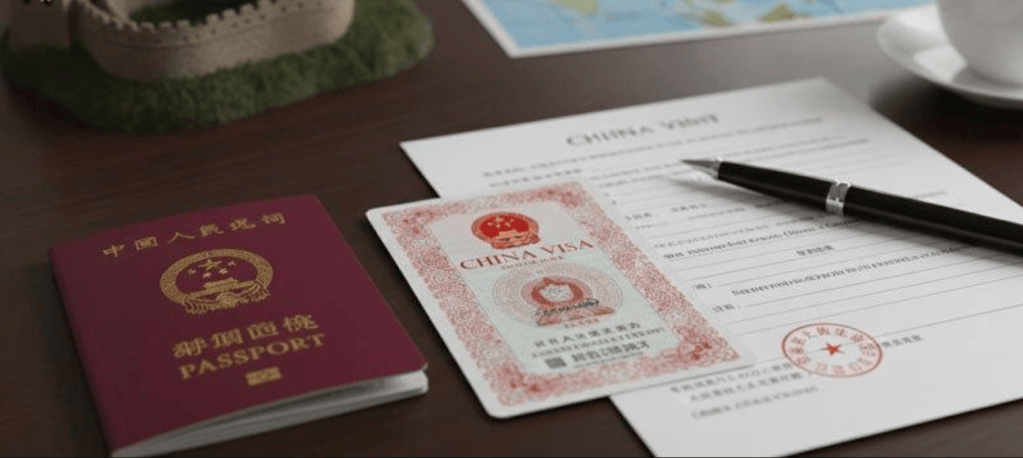
2. China Visa Requirements and How to Apply
One of the most important things to research before traveling to China is whether you need a visa.
Visa requirements depend on your nationality, passport, purpose of travel, and length of stay. China also offers certain visa-free entry and transit arrangements, but eligibility and conditions can change.
For U.S. passport holders, it’s important to check the current requirements before making travel arrangements rather than assuming a visa will or won’t be necessary.
We traveled to China for both business and sightseeing, so we applied for Chinese business visas.
Tourist Visa (L Visa)
If you’re traveling to China primarily for sightseeing, visiting attractions, or vacationing, you’ll generally apply for an L visa.
The application typically involves completing the online visa form, providing your passport and required supporting documents, and following the submission instructions from the Chinese embassy or consulate responsible for your jurisdiction.
Business Visa (M Visa)
For our trip, we needed an M visa because we were visiting factories and conducting business activities.
Business visa applications generally require documentation explaining the purpose of the visit, including an invitation from a business contact or organization in China. Depending on the application and current consular requirements, you may need details about the inviting company, the purpose of your meetings, and your intended travel dates.
Our visa application also involved sending our physical passports for processing. This is something I would strongly emphasize because it means you won’t have access to your passport while the application is being handled.
If you’re using a visa service, the company may coordinate document submission and passport return. However, don’t assume that every application can simply be mailed directly to a consulate. Submission procedures vary by location and may require an authorized representative or in-person processing.
Step-by-Step Chinese Visa Application
For U.S.-based applicants using the Chinese Embassy’s current online application process:
- Confirm your visa category. L visas are generally for tourism, while M visas cover commercial and trade activities such as business meetings and factory visits.
- Prepare your documents. For an M visa, obtain supporting documentation from your Chinese business partner, including the invitation details required by the consulate.
- Complete the online application. Visit the official China Online Visa Application system and upload your documents.
- Wait for preliminary review. Monitor the application until its status indicates that your passport can be submitted.
- Submit your physical passport. You or an authorized agent must submit the passport, application barcode page, and any required original documents to the appropriate visa office.
- Pay the applicable fee and collect your passport. Monitor the application status and check your visa’s details when it’s returned.
The embassy lists approximately four business days for regular processing after passport submission, but this does not include the preliminary review, shipping, or possible additional processing time.
Important for US travelers: The Chinese Embassy in Washington, D.C. does not accept visa applications mailed directly to it. If you live far from the visa office, a visa service or authorized agent may be able to handle the in-person submission and return your passport by mail.
What to Prepare for Your Visa Application
- A valid passport with sufficient remaining validity and blank visa pages
- Completed visa application
- Passport photograph meeting the required specifications
- Supporting documents for your visa category
- Business invitation letter, if applying for an M visa
- Any additional documents requested by the relevant consulate
- A secure method of submitting and receiving your passport
Travel Raven Tip: Apply well before your departure and avoid scheduling international travel that requires your passport while your visa is being processed. If you plan to use a visa service, factor in mailing time in both directions.
For current requirements, visit the Chinese Visa Application Service website and the Chinese Embassy in the United States.
3. Important Things to Know Before Visiting China
Beyond obtaining the necessary travel documents, there are several differences worth understanding before visiting mainland China.
Many of the everyday services travelers rely on, including payments, navigation, transportation, and communication, work differently from what you may be accustomed to in the United States.
Understanding these differences ahead of time can make arriving and getting settled much easier.
Language and Communication
Mandarin Chinese is the official language of mainland China, although regional languages and dialects are also widely spoken.
English is not universally spoken, especially outside major tourist attractions, international hotels, and airports.
We found translation apps particularly helpful when communicating with drivers, restaurant staff, and other people we encountered.
Hotel employees were also very helpful throughout our trip, especially when we needed assistance or recommendations.
I recommend having a reliable translation app ready before arriving and saving important addresses in Chinese.
Internet Restrictions
Mainland China restricts access to a number of websites and services commonly used in other countries.
These can include Google services, Instagram, Facebook, WhatsApp, and other international platforms.
Because of this, it’s important to research your internet options before departure.
Depending on your mobile carrier, international roaming plan, or travel eSIM, some services may remain accessible through international routing. Access is not guaranteed and can vary by provider.
Don’t assume your usual apps will work the same way on every connection.
China Is Primarily Cashless
One of the biggest differences travelers will notice is how frequently mobile payments are used.
Alipay and WeChat Pay are widely used for purchases, transportation, restaurants, and everyday services.
While cash remains legal tender, relying entirely on physical cash or foreign credit cards can be inconvenient.
I recommend setting up at least one mobile payment app before leaving home.
Traveling Between Mainland China and Hong Kong
If your itinerary includes Hong Kong, it’s important to understand that traveling between Hong Kong and mainland China involves some differences.
Although Hong Kong is part of China, it operates under a separate immigration and customs system. Entering mainland China from Hong Kong generally involves a separate border inspection, and travelers must meet the mainland’s entry requirements.
Payment systems can also be different. While Alipay and WeChat Pay are widely used in mainland China, Hong Kong has its own commonly used payment options, including Octopus, credit cards, and locally supported digital wallets.
Transportation works differently as well. Hong Kong has its own MTR system, taxis, and local transit arrangements, so don’t assume the exact same apps and payment methods you used on the mainland will work everywhere. Uber worked for us.
We visited Hong Kong during our trip, and understanding these differences ahead of time made planning transportation and payments much easier.
Travel Raven Tip: If you’re entering mainland China, visiting Hong Kong, and then returning to the mainland, check your visa’s permitted number of entries. Leaving mainland China for Hong Kong generally counts as an exit for visa purposes, and returning may require another valid entry.
I’ll cover Hong Kong’s transportation, payments, and sightseeing in more detail in my separate Hong Kong Travel Guide.

4. Budgeting, Booking Hotels, Transportation & Activities
Once we decided which cities to visit, the next step was figuring out how to connect everything.
For a multi-city, multi-province China itinerary, I recommend researching flights, high-speed trains, hotels, and major attractions together rather than booking each independently. Transportation schedules can determine how much time you actually have in a destination, and some attractions require reservations well in advance.
Creating a Travel Budget
Before booking, we needed to account for more than just international airfare and hotels. Traveling across multiple provinces meant budgeting for domestic flights, high-speed trains, local transportation, attraction tickets, meals, and business-related expenses.
I recommend creating a spreadsheet with estimated costs for each destination and keeping a separate category for unexpected expenses. It’s also helpful to decide where you’re comfortable spending more and where you can save.
Booking Accommodations
The hotels we stayed at throughout China were incredibly accommodating. Every property offered some form of transportation assistance, whether that meant airport pickup, arranging transfers, or helping us get to and from train stations and attractions. The staff were also very helpful whenever we needed something.
Before booking accommodations, check whether the property offers airport or train station transfers, luggage storage, laundry facilities, breakfast, and English-speaking assistance.
If you’re arriving late or leaving early, I would also recommend contacting the hotel beforehand to confirm transportation arrangements.
Foreign visitors are required to register their accommodations while staying in mainland China. Fortunately, hotels typically handle this registration automatically when you check in using your passport.
If you’re staying in a private residence or certain other accommodations instead of a hotel, you may need to complete the registration yourself with the local authorities, generally within 24 hours of arrival.
Booking Transportation & Attractions
For transportation, we used a combination of flights, high-speed trains, and local transportation depending on the destination.
I found it helpful to research transportation at the same time as accommodations. For example, a hotel that looks centrally located may not be convenient for the particular train station or airport you’re using.
Attractions require just as much attention. Some popular destinations have limited daily capacity or timed-entry reservations, so it’s important to know exactly when tickets become available.
Many popular attractions in China require your passport information when booking tickets. In some cases, your passport serves as your actual entry ticket, so you won’t receive a separate physical ticket.
Make sure your reservation details match your passport exactly, and bring your physical passport when visiting attractions that require identification.
I’ll cover our complete route, transportation methods, and booking process in my separate China Transportation Guide, along with our detailed itinerary.
Travel Raven Tip: Don’t assume your hotel only provides what’s listed on the booking website. If you need a transfer, luggage storage, or assistance arranging transportation, ask! Our hotels were incredibly accommodating and helped us with nearly everything we needed.
5. Essential Apps to Download Before Visiting China
One of the most important things you can do before arriving in China is download and set up your essential travel apps.
China is extremely convenient once you understand its digital systems, but many everyday activities rely on your smartphone. From paying for meals to ordering transportation and navigating unfamiliar cities, your phone will quickly become one of your most important travel tools.
These are the apps I recommend preparing before your trip:
| App | What You’ll Use It For |
|---|---|
| Alipay | Mobile payments, QR codes, and access to services such as DiDi |
| Messaging, mini-programs, and WeChat Pay where available | |
| DiDi | Booking taxis and ride-hailing services |
| Amap (Gaode Maps) | Navigation, walking directions, and finding local businesses |
| Trip.com/Klook.com | Hotels, flights, trains, attractions, and transfers |
| Translation app | Communicating with staff, reading signs, and translating menus |
I recommend downloading these before departure and completing any registration or identity verification that may be required. You should also make sure your international payment cards are properly linked where supported.
Although some apps have English-language interfaces, others may require a little practice. Spending time familiarizing yourself with them before arriving will make the transition much easier.
Travel Raven Tip: Save your hotel’s address in Chinese and keep screenshots of important reservations. Even with translation apps, having the exact address ready to show a driver or hotel employee can save time. I ended up finding each point of interest on Amap and starred it so I did not have to worry about translation issues or finding the destination.
I’ll be sharing a separate step-by-step guide on How to Set Up and Use Alipay, WeChat Pay, and DiDi in China, including account registration, linking international credit cards, making payments, and navigating common issues.

6. Money and Payments in China
Preparing our payment methods before departure was another important part of our trip planning.
Mainland China uses the Chinese yuan, also called renminbi (RMB or CNY).
Mobile payments are extremely common, and many everyday transactions are handled through QR codes.
Setting Up Mobile Payments
Before traveling, I recommend setting up Alipay and, if needed, WeChat Pay.
Link an eligible international card, complete any required identity verification, and familiarize yourself with how the payment interface works.
Some transactions may require additional verification or may not support certain foreign cards.
Having more than one payment method available is helpful if your primary option doesn’t work.
Credit Cards and Cash
Foreign Visa and Mastercard credit cards may be accepted at international hotels, larger retailers, and certain other establishments, but acceptance is not universal.
Cash can still be used, and merchants generally must accept legal tender, subject to applicable rules. However, mobile payments are often more convenient.
I recommend carrying a modest amount of local currency as a backup rather than relying on cash for every purchase.
7. Internet Access & Staying Connected
Before traveling to China, one of my biggest recommendations is to make sure you have reliable mobile service from the moment you arrive.
Your phone is essentially your wallet, translator, navigation system, and transportation tool. Losing access to it can make even simple tasks more difficult.
I use Verizon, so before leaving, I arranged international coverage through Verizon TravelPass. Once I arrived, my phone connected to a supported local network, and I didn’t experience any major internet issues throughout the trip.
For me, this was one of the easiest parts of traveling in China. I didn’t need to purchase a separate physical SIM card or constantly switch between different networks.
Depending on your provider, you may have several options, including international roaming, travel eSIMs, or local SIM cards. Compare pricing, data allowances, device compatibility, and which services you’ll be able to access before deciding.
It’s also important to understand that certain international websites and apps may be restricted on mainland Chinese networks. If you rely on Google services, social media, or other international platforms, research connectivity options beforehand rather than assuming everything will work the same as at home. Roaming and travel eSIMs can behave differently from local Chinese SIMs, so check with your provider.
Travel Raven Tip: Keep your phone charged whenever possible. I recommend carrying a charging cable, using charging opportunities at hotels and transportation hubs, and checking China’s power bank restrictions before packing a portable charger.
8. What to Pack for China
One of the biggest packing lessons from our trip was that you really don’t need to bring as much as you think.
We traveled across several provinces with different climates and activities, so packing required some planning. However, many hotels offered laundry services or facilities, and most provided basic toiletries and amenities.
Clothing & Weather
Before packing, check the forecast for every destination on your itinerary rather than just your arrival city.
China covers an enormous geographic area, and the weather can vary significantly between regions. During our trip, we needed clothing suitable for warm cities, outdoor sightseeing, business meetings, and cooler mountain environments.
I recommend packing versatile clothing that can be layered, comfortable walking shoes, and activity-specific items such as rain protection or hiking clothes when needed.
Since laundry was available at many of our hotels, there was no need to pack a completely different outfit for every day of the trip.
Toiletries & Personal Items
Most of our hotels provided shampoo, conditioner, body wash, toothbrushes, and other basic toiletries. Because of this, I recommend bringing only the personal-care products you specifically prefer or may have difficulty finding.
This is especially helpful if you’re traveling with multiple suitcases or taking several domestic flights and high-speed trains.
Electrical Outlets & Voltage
China uses approximately 220 volts at 50 Hz, compared with the 120 volts at 60 Hz commonly used in the United States.
You’ll encounter Type A, Type C, and Type I outlets, depending on the property. Some American two-prong plugs fit directly into compatible outlets, but not all U.S. plugs will work without an adapter.
We were able to use our devices without issues, but it’s important to check the voltage rating on each item before plugging it in.
Most modern phone chargers, laptops, and camera chargers are rated for 100–240V, 50/60Hz, meaning they can generally be used with a suitable plug adapter. Hair dryers, curling irons, and other heat-producing appliances may require special attention if they aren’t dual-voltage.
Travel Raven Tip: A plug adapter changes the plug shape, not the voltage. Check your device’s input label before using it, and remember that many hotels already provide hair dryers.
Medications & First Aid
If you take prescription medications or regularly use over-the-counter products, check China’s medication import rules before traveling.
Some medications commonly prescribed in the United States may be restricted or require additional documentation.
| Medication category | What travelers should know |
|---|---|
| ADHD stimulants, including Adderall and Vyvanse | Controlled or potentially restricted; confirm whether your exact medication can legally be brought into China |
| Opioid pain medications | May be subject to special documentation and personal-use quantity limits |
| Certain anxiety, sleep, and psychiatric medications | Some contain controlled psychotropic substances |
| Cannabis, THC, and CBD products | Avoid bringing these due to China’s strict drug laws |
| Ordinary over-the-counter medications | Check individual ingredients, particularly combination cold medicines and products containing controlled substances |
Keep medications in their original packaging, along with a copy of your prescription and a doctor’s letter when necessary. Having a prescription does not automatically make every medication legal to import, so confirm requirements before departure.
China Packing Checklist
Documents
- Passport and visa, if required
- Flight and hotel confirmations
- Business invitation documents, if applicable
- Prescription and medical documentation
- Offline copies of reservations
Clothing & personal items
- Comfortable walking shoes
- Layered clothing for different climates
- Business attire, if needed
- Rain jacket or umbrella
- Essential toiletries
- Prescription medications in original packaging
Electronics
- Phone and charging cable
- Compatible plug adapter
- Dual-voltage chargers
- Airline-compliant portable charger
- Camera and accessories
- International roaming or eSIM arranged
Everyday essentials
- Toilet paper or tissues
- Disinfecting wipes
- Small day bag
- Reusable water bottle
- Backup payment card
- Some cash in Chinese yuan
9. Airport Security, Customs & Arriving in China
One thing that stood out during our trip was how thorough airport security was, especially when traveling on domestic flights.
Compared with what we were used to in the United States, the screening process felt much stricter. We had items flagged during baggage screening and learned that some everyday products weren’t permitted through security.
Power Banks & Portable Chargers
China has specific rules for portable chargers, and this is something I wish we’d paid closer attention to before traveling.
Since June 28, 2025, power banks without a clear China Compulsory Certification (CCC or 3C) marking, with illegible markings, or belonging to recalled models have been prohibited on domestic flights in mainland China.
Power banks must be packed in carry-on luggage, never checked baggage. Under standard aviation battery rules, power banks up to 100 watt-hours are generally permitted, while certain larger batteries require airline approval. The CCC requirement is an additional restriction for domestic flights.
If you’re bringing a portable charger from the United States, check the label carefully before leaving. Even if it’s accepted on your international flight, it may not meet the requirements for a domestic flight within China.
Liquids, Hand Sanitizer & Other Restricted Items
We also experienced stricter screening of liquids and personal-care items, including hand sanitizer.
Alcohol-based hand sanitizers can be prohibited or restricted depending on their composition and the applicable aviation rules. We had issues with these products during our travels, so I recommend checking the airline’s current policy rather than assuming travel-size bottles will be accepted.
Other items to review include aerosols, sharp objects, flammable materials, and lithium batteries. Fresh fruits, meats, and certain agricultural products may also be restricted when entering China.
Checked Baggage Screening
Another important difference we noticed was the checked-baggage screening process.
Our luggage was scanned after being handed over at the check-in counter, and we needed to remain nearby in case an item was flagged for additional inspection.
I recommend allowing extra time at the airport and waiting until your luggage has been accepted and cleared before heading toward security.
Customs & Immigration
Despite the strict airport security, our arrival and immigration experience was straightforward.
We were processed individually, even though we were traveling together. The officers asked basic questions, and the process went smoothly because we had our passports and supporting documents ready.
For first-time visitors, I recommend keeping your passport, visa if required, hotel information, return or onward travel details, and business invitation documentation if applicable easily accessible.
China also offers an official online arrival card that eligible foreign visitors can complete before entering the country. Paper or on-site completion options may be available for travelers who cannot submit it in advance.
Official China Online Arrival Card
Travel Raven Tip: Arrive at airports earlier than you normally would, particularly for domestic flights. Between passport verification, baggage screening, and security checks, allowing extra time makes the process much less stressful.

10. Tips and Things to Know While Traveling in China
Once we arrived, many of the things we had worried about became much easier. China is incredibly convenient for travelers, especially when you have the right apps and know a few things about daily life.

Public Restrooms & What to Bring
One thing I would absolutely recommend is carrying your own toilet paper or tissues and disinfecting wipes.
Many public restrooms don’t provide toilet paper inside individual stalls, and some may not have it available at all. Having your own supplies makes a huge difference, especially during long sightseeing days.
You’ll also encounter squat toilets throughout China, particularly in public facilities. Western-style seated toilets are available in some locations, but they aren’t guaranteed.
If you have mobility limitations or difficulty squatting, it’s worth planning restroom stops at hotels, larger shopping malls, or other facilities where accessible toilets may be available.
It definitely took some getting used to, but I promise it becomes easier!
Don’t Be Afraid to Ask for Help
People were very helpful and accommodating throughout our trip, especially at our hotels.
Whenever we needed help arranging transportation, storing luggage, or figuring out logistics, the staff went out of their way to assist us.
There were several occasions when we needed something we hadn’t planned for, and our accommodations were able to help.
My biggest advice is to simply ask. Even if there’s a language barrier, translation apps make communicating much easier.
Keep Your Phone Charged
I can’t emphasize this enough: your phone will be your lifeline in China.
We relied on ours for mobile payments, navigation, transportation, translations, hotel information, and reservations.
I recommend keeping your phone charged, carrying your hotel address in Chinese, and saving screenshots of anything important in case your internet connection temporarily drops.
Food, Drinking Water & Everyday Essentials
One additional thing worth preparing for is the difference in everyday food and drink habits.
Tap water generally isn’t recommended for drinking untreated in mainland China. Bottled or properly boiled water is the safer choice, and many hotels provide bottled water or kettles.
If you have food allergies or dietary restrictions, save a translated explanation on your phone before traveling. This can be especially helpful when ordering from restaurants with limited English menus.
Save Addresses in Chinese
Before leaving your hotel, save the destination’s name and address in Chinese.
This is especially useful when arranging transportation or asking for directions. English translations and place names don’t always match what appears in local navigation apps.
Keep Your Passport Accessible
Your passport may be needed for hotel check-in, transportation, and certain attraction reservations.
Some attractions use passport information to verify tickets, so make sure the passport details on your reservations are accurate. Keep your passport secure and accessible when needed.
Allow Extra Time at Transportation Hubs
Airports and major railway stations can be large and busy.
Allow enough time for security, finding the correct terminal or platform, and completing any necessary identification checks. This is particularly important when you’re unfamiliar with the station layout or traveling during busy periods.
Ask Your Hotel for Assistance
Hotel staff were helpful throughout our trip. Whether we needed directions, recommendations, or assistance with local arrangements, they were a useful resource.
If you’re having difficulty finding a destination or communicating with a service provider, your hotel’s front desk may be able to help.
Be Prepared for Changes in Weather
Weather can affect outdoor attractions, particularly in mountainous areas.
For outdoor destinations, check the forecast regularly and avoid building an itinerary that depends entirely on perfect conditions. Having an alternative activity in mind can help you make better use of your time if plans change.
Understand How Reservations Work
Some attractions require advance reservations, specific entry times, or identification matching the ticket. Others may use official websites or mini-programs for bookings.
Research the requirements for major attractions before your visit rather than assuming tickets will always be available at the entrance.
Be Flexible With Your Plans
Even with months of preparation, not everything will go exactly as planned.
During our visit to Zhangjiajie, our via ferrata activity was canceled because of strong winds. While it was disappointing, it was also a reminder that outdoor attractions are always subject to weather conditions.
This is especially important when planning mountain destinations, national parks, or activities that depend on cable cars and other weather-sensitive transportation.
Try not to schedule every hour of your day. Having some flexibility makes it much easier to adjust when something unexpected happens.
Travel Raven Tip: Save your hotel contact information and ask staff for assistance when plans change. Whether you need help arranging a last-minute transfer or storing luggage while sightseeing, they may have options you wouldn’t otherwise know about.
11. Final Preparation Checklist
Before leaving for China, I recommend reviewing everything you’ve organized to make sure there are no outstanding reservations or important tasks.
Travel Documents
- Check passport validity and blank pages.
- Confirm current visa or visa-free entry requirements.
- Apply for the appropriate visa if required.
- Verify visa details after issuance.
- Save copies of important travel documents.
- Review immigration requirements for Hong Kong if visiting.
Trip Planning and Reservations
- Decide how long to stay in China.
- Choose destinations and finalize your route.
- Build a day-to-day itinerary.
- Create a calendar for booking deadlines.
- Reserve international and domestic transportation.
- Book accommodations.
- Research attractions requiring advance reservations.
- Confirm any scheduled business visits or appointments.
Apps and Payments
- Download and set up Alipay.
- Set up WeChat if needed.
- Link eligible payment cards.
- Download DiDi or confirm access through an available integration.
- Install translation and navigation apps.
- Save important addresses in Chinese.
- Prepare a backup payment method.
Internet and Electronics
- Choose an international roaming plan or travel eSIM.
- Check mainland China and Hong Kong coverage.
- Confirm phone compatibility.
- Download offline travel information.
- Pack charging cables and appropriate adapters.
- Check power bank and airline requirements.
Packing and Final Arrangements
- Save reservation confirmations and important contact details.
- Research the weather for each destination.
- Pack comfortable walking shoes and suitable clothing.
- Prepare toiletries and personal essentials.
- Check medication import requirements.
- Review luggage restrictions for domestic transportation.
- Confirm hotel addresses and check-in information.
12. What I Would Do Differently
Looking back, I’m glad we spent so much time preparing for our trip. Traveling across several provinces while balancing business commitments and sightseeing required a lot of coordination, and having everything organized made the experience much smoother.
However, there are a few things I would approach differently next time.
Pack lighter. With laundry available at many of our accommodations and basic toiletries provided, we could have reduced the amount of luggage we brought. This would have made traveling between cities even easier.
Double-check restricted items before flying. Airport security was much stricter than we expected, particularly with portable chargers and certain personal-care products. Next time, I would carefully review airline restrictions before packing.
Leave more flexibility around outdoor activities. Weather can change quickly, especially in mountainous regions like Zhangjiajie. Having backup activities or additional time would make unexpected cancellations easier to manage.
Take advantage of hotel services sooner. Our accommodations were extremely helpful with transportation, luggage storage, and everyday needs. I would contact hotels ahead of time to find out exactly what services they offer rather than assuming we need to arrange everything ourselves.
Overall, I wouldn’t change the amount of research we put into planning. If anything, the preparation allowed us to enjoy the trip more because we weren’t constantly figuring out logistics along the way.
12. China Travel Planning Checklist & Booking Calendar
One of the best ways to stay organized is to create a calendar with everything that needs to be booked before departure.
For our trip, I found that transportation, attractions, accommodations, and business commitments all needed to be coordinated, especially because some activities could only be reserved within specific booking windows.
Here’s the general timeline I recommend for a multi-city trip to China.
| When | What to Prepare |
|---|---|
| 6-12 months before | Check passport validity and visa requirements, research destinations, determine your budget, and begin organizing your itinerary. |
| 2–3 months before | Prepare visa documents, book major flights and accommodations, arrange business meetings, and research transportation between cities. |
| 1 month before | Download essential apps, arrange international mobile service, check hotel amenities, review medication restrictions, and create a packing checklist. |
| 2-3 weeks before | Book attractions as reservation windows open, confirm transportation, check weather forecasts, and save hotel addresses in Chinese. |
| 1–7 days before | Complete applicable arrival documentation, verify baggage restrictions, confirm airport pickups, check attraction closures, and organize travel documents. |
These are suggested planning windows rather than universal deadlines. Some attractions, such as the Forbidden City, use short booking windows, while other experiences may be reserved months ahead.
Travel Raven Tip: I recommend keeping a spreadsheet or calendar with each activity, reservation opening date, booking confirmation, transportation details, and cancellation policy. This was especially helpful when coordinating multiple cities and activities throughout our trip.
13. Final Thoughts
Planning our first trip to China took several months, but every bit of preparation was worth it. Between visiting different provinces, experiencing incredible natural landscapes, and balancing business with sightseeing, it ended up being one of our most memorable adventures.
If I could offer one piece of advice, it would be to prepare early but remain flexible. Download your essential apps, organize your transportation and accommodations, pack lighter than you think, and don’t be afraid to ask for help along the way.
I hope this guide makes planning your first trip to China a little easier. If you have any questions or tips of your own, feel free to leave a comment below!
Happy travels! 🇨🇳