Summer is one of the best times to explore U.S. national parks. Trails are open, roads are accessible, and longer days give you more time to explore. That said, every park offers a completely different experience. Some are best for cooler mountain hikes, others bring heat but unforgettable landscapes.
This guide breaks down some of the best national parks to visit in the summer, with exactly what you need to plan your trip, including how to get there, where to stay, top hikes, things to do, and how to pack for each one.
1. Zion National Park, Utah
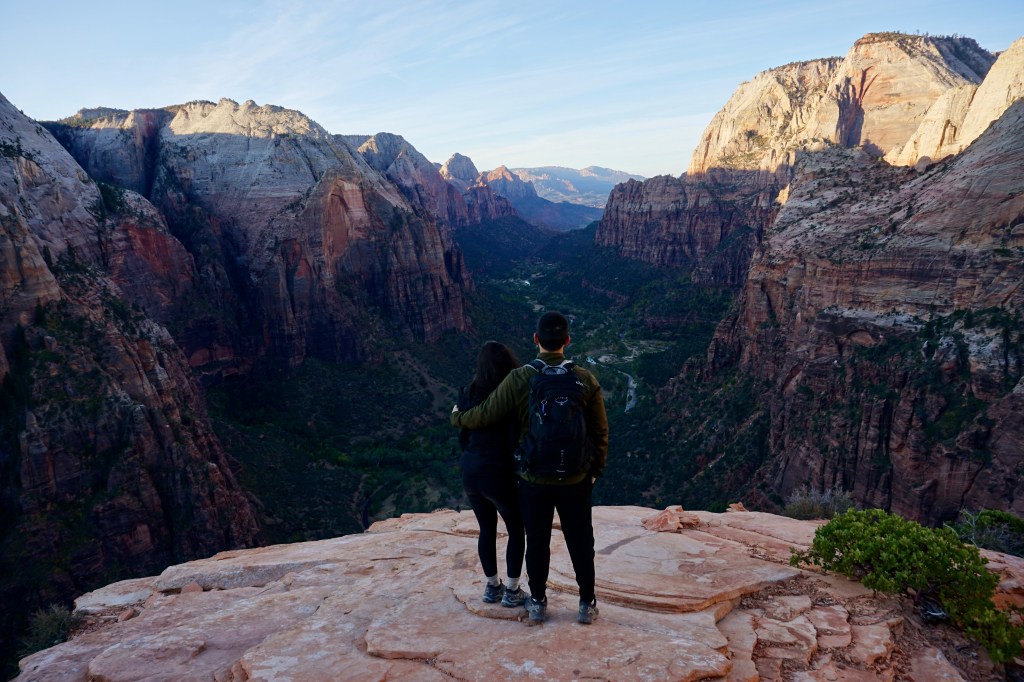
Zion is one of the most iconic national parks in the United States, known for its towering red rock cliffs, narrow slot canyons, and hikes that place you directly in the landscape. Summer brings full access to the park and long hiking days, but also extreme heat and large crowds, so planning ahead is important.
How to Get There
- Fly into Las Vegas (LAS)
- Approximately 2.5 hour drive
- Stay in Springdale for the most convenient access
Top Hikes
Easy:
- Canyon Overlook Trail
- Distance: 1 mile round trip
- Elevation: 160 ft
- Short hike with a big payoff, offering one of the best viewpoints in the park
- Pa’rus Trail
- Distance: 3.5 miles round trip
- Elevation: 147 ft
- Flat, paved trail with open canyon views, also bike accessible
Moderate:
- Observation Point (via East Mesa)
- Distance: 6 to 8 miles round trip
- Elevation: 705 ft
- Less crowded alternative with a higher viewpoint overlooking Zion Canyon
- Riverside Walk
- Distance: 2.2 miles round trip
- Elevation: 413 ft
- A paved trail along the Virgin River that leads to the start of The Narrows
Hard:
- Angels Landing
- Distance: 5 miles round trip
- Elevation: 1738 ft
- Steep switchbacks followed by a narrow ridge with chains, permit required
- The Narrows (Bottom-Up)
- Distance: up to 9 miles out and back
- Elevation: 9.3 ft
- Hike through the river itself, expect water, changing conditions, and slippery terrain
Things to Do Outside of Hiking
- Ride the Zion Canyon shuttle through the park
- Drive the Zion-Mount Carmel Highway and tunnel
- Watch sunrise or sunset from Canyon Overlook
- Bike through the canyon
How to Prepare and What to Pack
- Lightweight, breathable clothing for extreme heat
- At least 2–3 liters of water per person
- Sun protection including hat, sunscreen, and sunglasses
- Water shoes or hiking sandals for river hikes
- Early start times to avoid heat and crowds
Fun Fact
Zion was Utah’s first national park and was originally named Mukuntuweap, which translates to “straight canyon.”
2. Great Sand Dunes National Park, Colorado
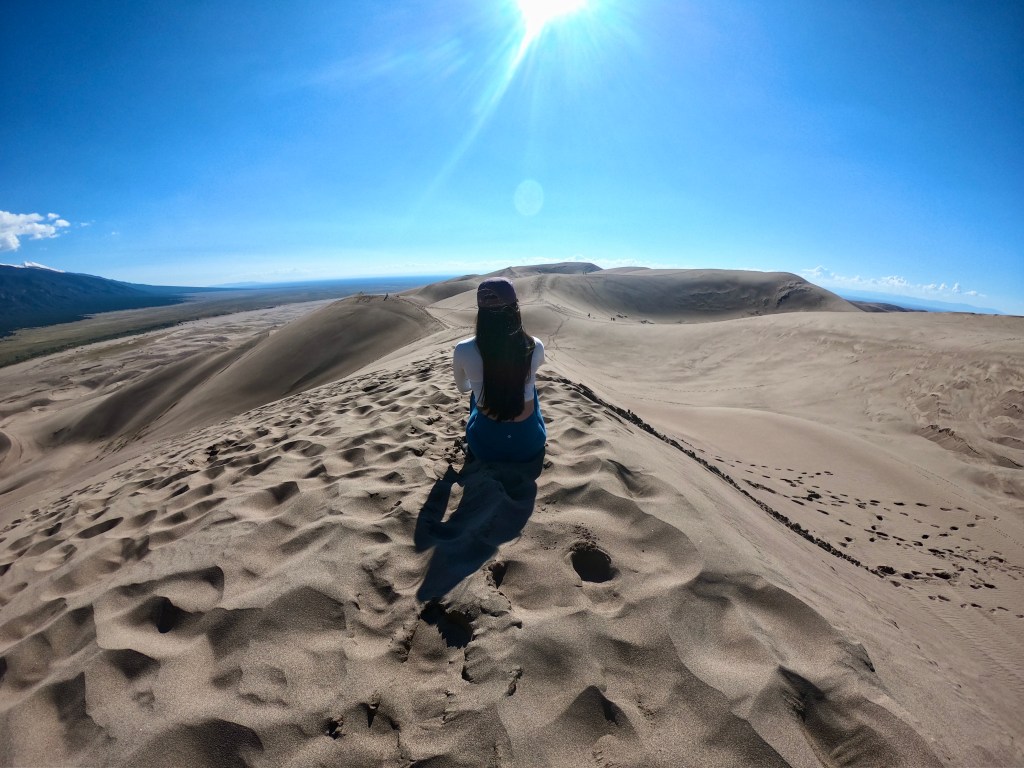
Great Sand Dunes is one of the most unique landscapes in the U.S., featuring massive dunes rising out of a valley surrounded by mountains. Summer is one of the best times to visit Colorado, especially when Medano Creek is flowing.
How to Get There
- Fly into Denver (DEN)
- Approximately 4 hour drive
- Stay in Alamosa or camp within the park
Top Hikes
Easy:
- Montville Nature Trail
- Distance: 0.5 miles round trip
- Elevation: 91 ft
- Hike through pine forest along the dunes.
Moderate:
- High Dune Loop
- Distance: 3 miles round trip
- Elevation: 700 ft
- Steep climb through sand, physically demanding due to loose terrain
Hard:
- High and Star Dune Loop
- Distance: 8 miles round trip
- Elevation: 1309 ft
- Dune focused hike
Things to Do Outside of Hiking
- Sandboarding or sand sledding
- Stargazing in one of the darkest sky areas in the U.S.
- Sunrise and sunset photography
How to Prepare and What to Pack
- Lightweight clothing for hot daytime temperatures
- Layers for cooler evenings
- Sunglasses and sun protection for sand reflection
- Closed shoes to protect feet from hot sand
- Extra water due to dry conditions
Fun Fact
Great Sand Dunes contains the tallest sand dunes in North America, reaching over 700 feet high.
3. Carlsbad Caverns National Park, New Mexico
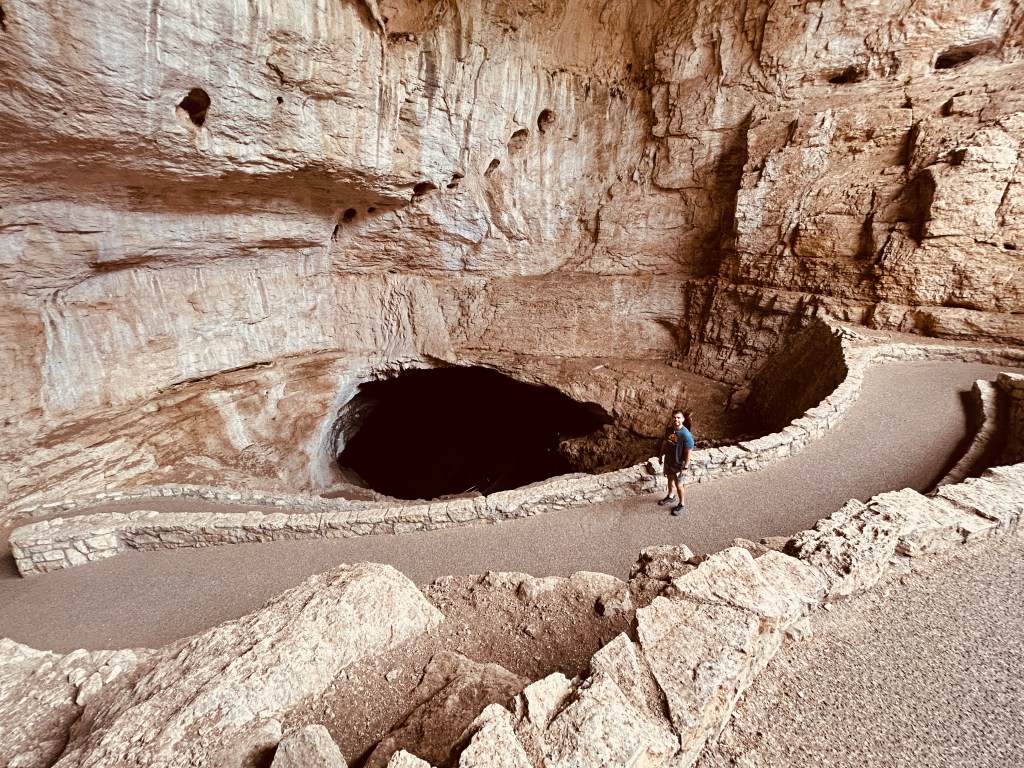
Carlsbad Caverns offers a completely different experience from most national parks, as the main attraction is underground. The cave system is massive and stays cool year-round.
How to Get There
- Fly into El Paso, Texas (ELP)
- Approximately 2 hour drive
- Stay in Carlsbad or White’s City
Top Hikes
Easy:
- Natural Entrance Trail
- Distance: 1.25 miles one way
- Elevation: 750 ft descent
- Steep paved path entering the cave
- Big Room Trail
- Distance: 1.25 miles loop
- Elevation: minimal
- Flat, accessible route through one of the largest cave chambers
Moderate
- Old Guano Trail to White’s City
- Distance: 7.5 miles out and back
- Elevation: 770 ft
- Take a step into history and view remnants of the mining operations, located about a mile from the entrance
Hard
- Slaughter Canyon Cave
- Distance: 1 mile out and back
- Elevation: 472 ft
- Requires guided access and involve crawling, climbing, and tight spaces
Things to Do Outside of Hiking
- Bat flight program at sunset
- Scenic desert drives
- Visitor center exhibits
How to Prepare and What to Pack
- Light jacket as caves stay around 56°F
- Comfortable walking shoes
- Water for above-ground areas
- Flashlight not needed for main trails but useful for tours
Fun Fact
The Big Room inside Carlsbad Caverns is one of the largest cave chambers in North America.
4. Yosemite National Park, California
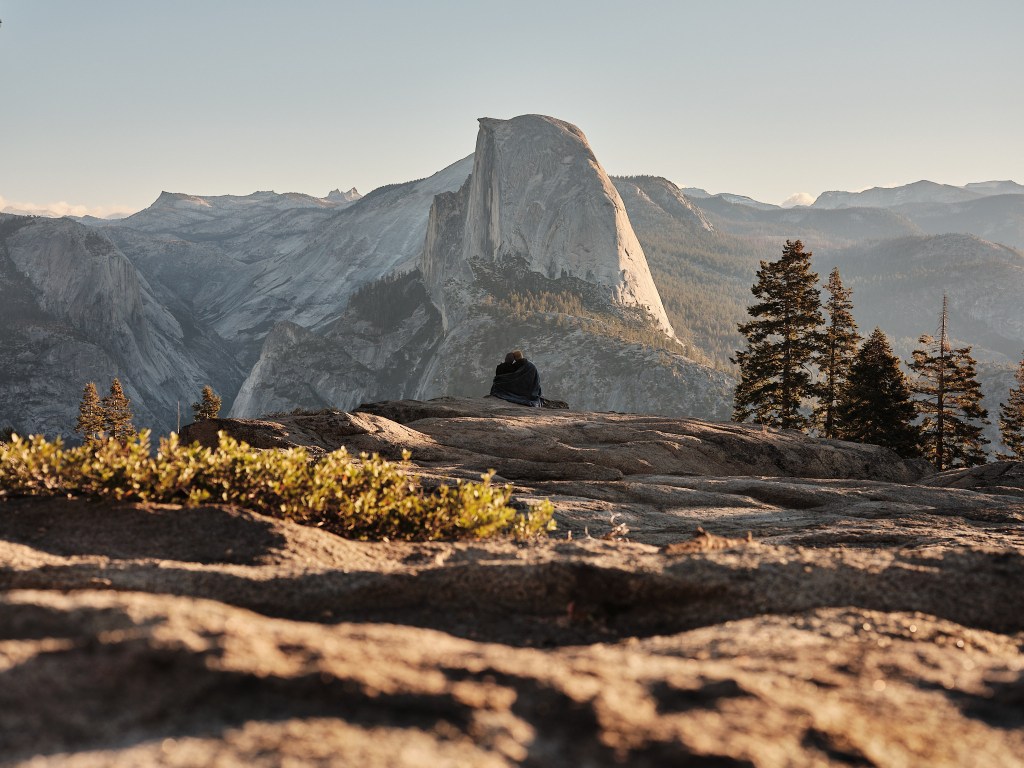
Yosemite is one of the most recognizable national parks in the United States, known for its massive granite cliffs, waterfalls, and valley views. Summer is when the park is fully accessible, making it one of the most popular times to visit, but also one of the busiest.
How to Get There
- Fly into Fresno (FAT), San Francisco (SFO), or Sacramento (SMF)
- 3 to 5 hour drive depending on airport
- Stay inside the park if possible, or in Oakhurst or Yosemite West
Top Hikes
Easy:
- Lower Yosemite Falls
- Distance: 1 mile loop
- Elevation: 50 ft
- Short paved walk to the base of the waterfall
- Mirror Lake
- Distance: 2 to 5 miles depending on route
- Elevation: 301 ft
- Scenic, mostly flat trail with reflections of surrounding cliffs
Moderate:
- Mist Trail to Vernal Fall
- Distance: 3 miles round trip
- Elevation: 1,000 ft
- Steep sections with mist from the waterfall, can be slippery
- Yosemite Valley Loop
- Distance: up to 11 miles full loop
- Elevation: minimal
- Flat trail that gives a wide view of the valley
Hard:
- Half Dome
- Distance: 14 to 16 miles round trip
- Elevation: 4,800 ft
- Very strenuous, includes cable section, permit required
- Upper Yosemite Falls
- Distance: 7.2 miles round trip
- Elevation: 2,700 ft
- Steep climb with major elevation gain and panoramic views
Things to Do Outside of Hiking
- Drive to Glacier Point for panoramic views
- Explore Yosemite Valley viewpoints
- Visit Mariposa Grove to see giant sequoias
- Bike through the valley
How to Prepare and What to Pack
- Layered clothing for varying elevations
- Plenty of water and snacks
- Hiking boots with good grip
- Sunscreen and hat for exposed trails
- Reservations for entry and lodging
Fun Fact
Yosemite’s El Capitan is one of the largest granite monoliths in the world and attracts climbers from all over.
5. Glacier National Park, Montana
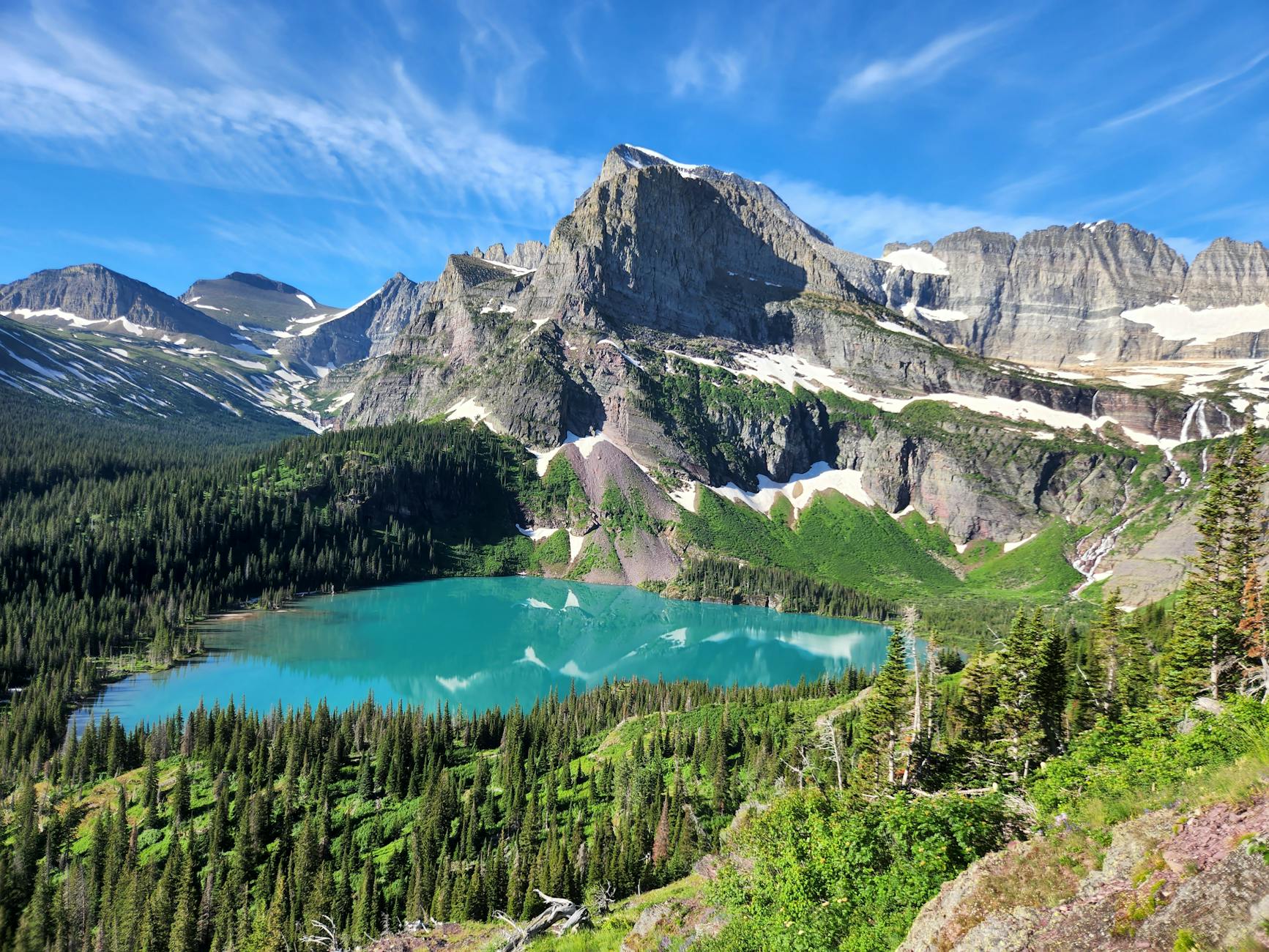
Glacier is one of the best parks to visit in summer because that is when most of the park finally opens. Snow melts, roads become accessible, and trails at higher elevations are available.
How to Get There
- Fly into Glacier Park International Airport (FCA)
- Stay in Whitefish, West Glacier, or St. Mary
Top Hikes
Easy:
- Trail of the Cedars
- Distance: 1 mile loop
- Elevation: minimal
- Boardwalk trail through old-growth forest
- Hidden Lake Overlook
- Distance: 2.7 miles round trip
- Elevation: 550 ft
- Elevated boardwalk with mountain views
Moderate:
- Avalanche Lake
- Distance: 4.5 miles round trip
- Elevation: 730 ft
- Forested trail ending at a lake surrounded by waterfalls
- Grinnell Lake
- Distance: 7 miles round trip
- Elevation: 500 ft
- Scenic trail with lake views and wildlife potential
Hard:
- Highline Trail
- Distance: 11 to 15 miles depending on route
- Elevation: 2,500 ft
- One of the most scenic trails in the park, exposed sections
- Grinnell Glacier
- Distance: 10.6 miles round trip
- Elevation: 1,600 ft
- Leads to one of the park’s remaining glaciers
Things to Do Outside of Hiking
- Drive Going-to-the-Sun Road
- Boat tours on glacier lakes
- Wildlife spotting
- Scenic overlooks throughout the park
How to Prepare and What to Pack
- Layers for cooler mornings and evenings
- Rain jacket for sudden weather changes
- Hiking boots
- Bear spray and awareness of wildlife safety
- Snacks and water for longer drives
Fun Fact
Glacier National Park has over 700 miles of hiking trails and is part of an international peace park with Canada.
6. Mount Rainier National Park, Washington
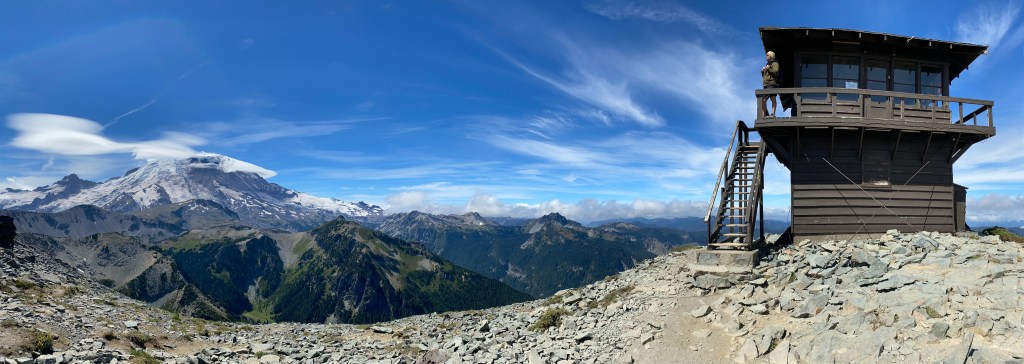
Mount Rainier is one of the most visually striking parks, with its snow-covered peak dominating the landscape. Summer is the best time to visit, when wildflowers bloom and trails are open.
How to Get There
- Fly into Seattle, Washington (SEA)
- 2 to 2.5 hour drive
- Stay in Ashford, Packwood, or Enumclaw
Top Hikes
Easy:
- Myrtle Falls
- Distance: 1 mile round trip
- Elevation: 164 ft
- Short walk with waterfall and mountain views
- Nisqually Vista Trail
- Distance: 1.2 miles loop
- Elevation: 200 ft
- Paved trail with glacier views
Moderate:
- Mount Fremont Lookout Trail
- Distance: 5.5 miles loop
- Elevation: 1,700 ft
- One of the most popular hikes with wildflowers and glacier views
- Dege Peak
- Distance: 3 miles round trip
- Elevation: 800 ft
- Short climb to a panoramic viewpoint
Hard:
- Skyline Trail
- Distance: 5.5 miles loop
- Elevation: 1,700 ft
- One of the most popular hikes with wildflowers and glacier views
- Burroughs Mountain Trail
- Distance: up to 9 miles
- Elevation: 2,500 ft
- Incredible close views of Mount Rainier
Things to Do Outside of Hiking
- Wildflower viewing in Paradise
- Scenic drives to Sunrise area
- Photography and viewpoints
- Ranger programs
How to Prepare and What to Pack
- Layers, including warm clothing even in summer
- Waterproof jacket
- Hiking boots
- Sunglasses for snow glare
- Sunscreen
Fun Fact
Mount Rainier is an active volcano and one of the most glaciated peaks in the lower 48 states.
7. Acadia National Park, Maine
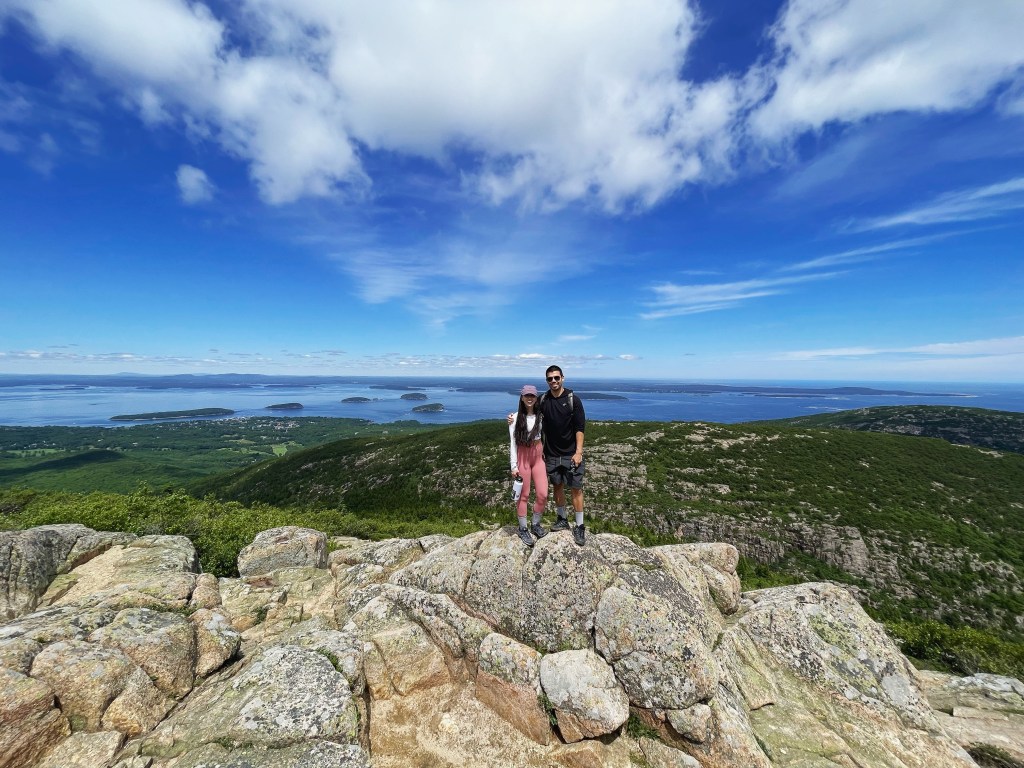
Acadia is one of the best summer destinations on the East Coast, combining coastal views, forests, and mountain hikes in one place. It offers a completely different feel compared to western parks.
How to Get There
- Fly into Bangor, Maine (BGR)
- About 1 hour drive to Bar Harbor
Top Hikes
Easy:
- Ocean Path
- Distance: 2 miles one way
- Elevation: minimal
- Coastal trail with ocean views
- Jordan Pond Loop
- Distance: 3.4 miles
- Elevation: minimal
- Flat loop around a scenic lake
Moderate:
- Gorham Mountain
- Distance: 3.5 miles
- Elevation: 500 ft
- Gradual climb with coastal views
- Beehive Trail
- Distance: 1.5 miles
- Elevation: 500 ft
- Steep with iron rungs and exposed sections
Hard:
- Precipice Trail
- Distance: 2.5 miles
- Elevation: 1,000 ft
- Very steep with ladders and cliffs
- Cadillac South Ridge
- Distance: 7 miles
- Elevation: 1,500 ft
- Long climb to the summit of Cadillac Mountain
Things to Do Outside of Hiking
- Drive to Cadillac Mountain
- Explore Bar Harbor
- Scenic Park Loop Road
- Coastal viewpoints
How to Prepare and What to Pack
- Light layers for coastal weather
- Windbreaker
- Comfortable shoes
- Water and snacks
- Sunscreen
Fun Fact
Cadillac Mountain is one of the first places in the United States to see the sunrise.
8. Grand Teton National Park, Wyoming
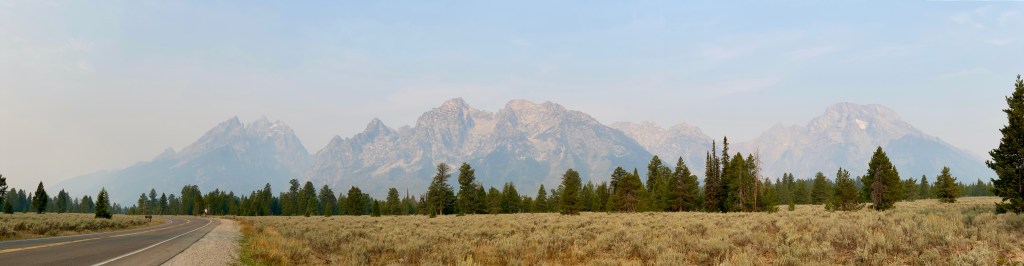
Grand Teton National Park is known for its sharp, dramatic mountain range that rises straight out of the valley floor. Compared to some other parks, it feels a bit more peaceful, but still offers incredible scenery, wildlife, and hiking. Summer is one of the best times to visit, with clear trails and active wildlife.
How to Get There
- Fly into Jackson Hole Airport (JAC), located inside the park
- Stay in Jackson, Teton Village, or inside the park
Top Hikes
Easy:
- Jenny Lake Loop (partial or full)
- Distance: 2 to 7 miles depending on route
- Elevation: 738 ft
- Scenic trail around the lake with mountain views
- Taggart Lake Trail
- Distance: 3 miles round trip
- Elevation: 400 ft
- Easy forest hike leading to a lake with Teton reflections
Moderate:
- Hidden Falls and Inspiration Point
- Distance: 5 miles round trip
- Elevation: 600 ft
- Includes a boat option to shorten the hike, ends with elevated views
- Cascade Canyon
- Distance: 9 miles round trip
- Elevation: 1,100 ft
- Gradual incline through one of the most scenic canyons in the park
Hard:
- Delta Lake
- Distance: 8 miles round trip
- Elevation: 2,200 ft
- Steep and unmaintained sections leading to a bright blue alpine lake
- Paintbrush Divide Loop
- Distance: 19 miles
- Elevation: 4,000 ft
- Long and challenging loop with high alpine views
Things to Do Outside of Hiking
- Wildlife spotting, especially early morning or evening
- Scenic drive along Teton Park Road
- Boat rides on Jenny Lake
- Photography at sunrise and sunset
How to Prepare and What to Pack
- Layers for cool mornings and evenings
- Hiking boots for uneven terrain
- Bear spray and awareness of wildlife safety
- Plenty of water and snacks
- Camera for wildlife and landscapes
Fun Fact
The Teton Range is one of the youngest mountain ranges in North America and has no foothills, rising directly from the valley floor.
9. Yellowstone National Park, Wyoming
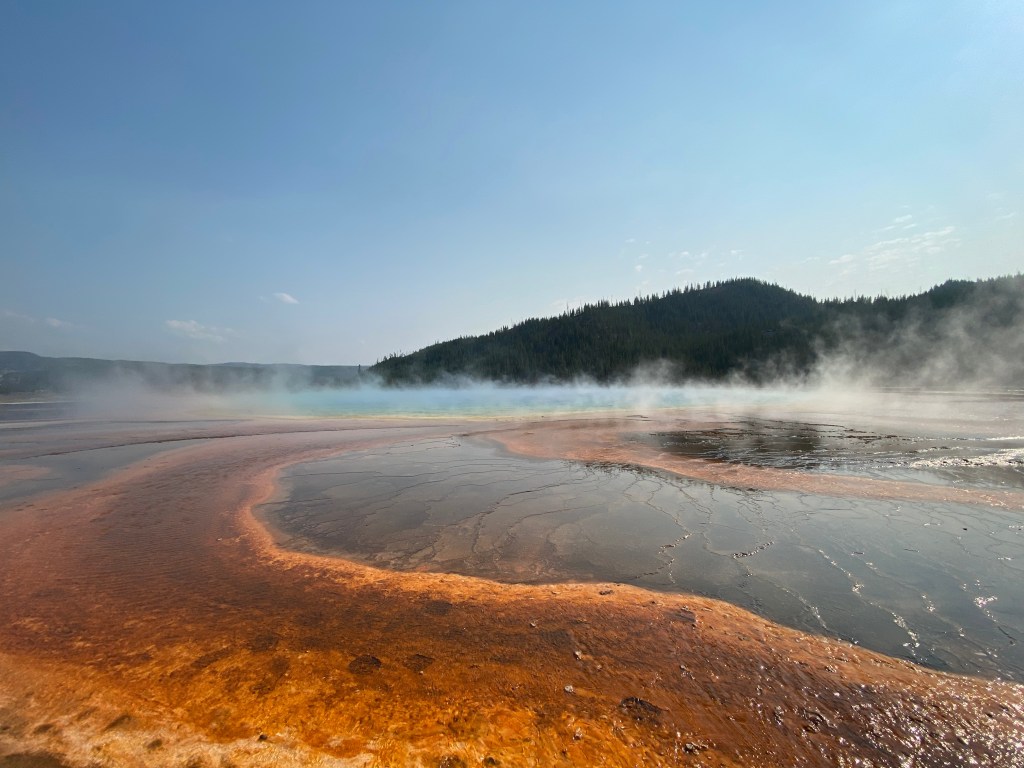
Yellowstone is one of the most diverse and expansive national parks in the U.S. It is known for its geothermal features, wildlife, and wide open landscapes. Summer is the best time to visit most areas, but it also requires more planning due to its size.
How to Get There
- Fly into Jackson Hole (JAC), Bozeman (BZN), or West Yellowstone (WYS)
- Choose lodging based on which area of the park you want to explore
Top Hikes
Easy:
- Grand Prismatic Spring Overlook
- Distance: 1.5 miles round trip
- Elevation: 100 ft
- Short hike to one of the most iconic views in Yellowstone
- Upper Geyser Basin Boardwalk
- Distance: 3 to 5 miles depending on route
- Elevation: 100 ft
- Walk among geysers and hot springs, including Old Faithful
Moderate:
- Fairy Falls
- Distance: 5 miles round trip
- Elevation: 200 ft
- Easy hike to a large waterfall, often combined with the overlook
- Mount Washburn
- Distance: 6 miles round trip
- Elevation: 1,400 ft
- Gradual climb with wide views and possible wildlife sightings
Hard:
- Avalanche Peak
- Distance: 5 miles round trip
- Elevation: ~2,100 ft
- Short but very steep with exposed sections
- Specimen Ridge Trail
- Distance: 10 miles one way
- Elevation: 2,000 ft
- Remote trail known for wildlife and fossil areas
Things to Do Outside of Hiking
- Watch Old Faithful erupt
- Visit Grand Prismatic Spring
- Drive through Lamar Valley for wildlife
- Scenic drives throughout the park
How to Prepare and What to Pack
- Layers for temperature changes throughout the day
- Comfortable walking shoes
- Binoculars for wildlife viewing
- Bear spray
- Snacks and water for long drives
Fun Fact
Yellowstone sits on top of a supervolcano, which fuels its geothermal activity.
10. Bryce Canyon National Park, Utah
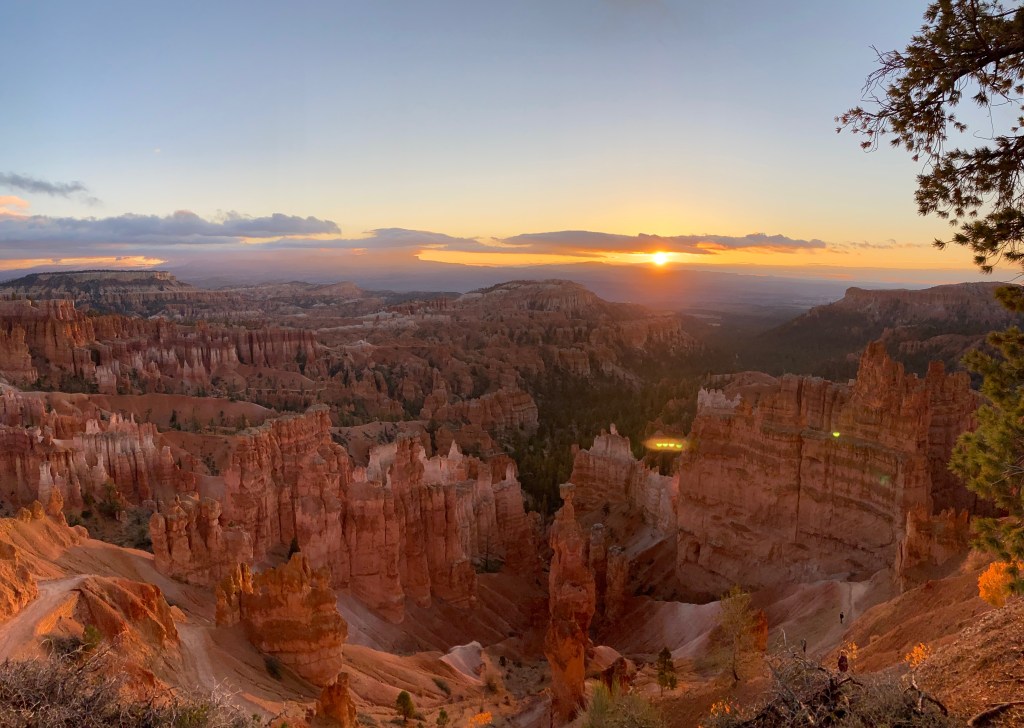
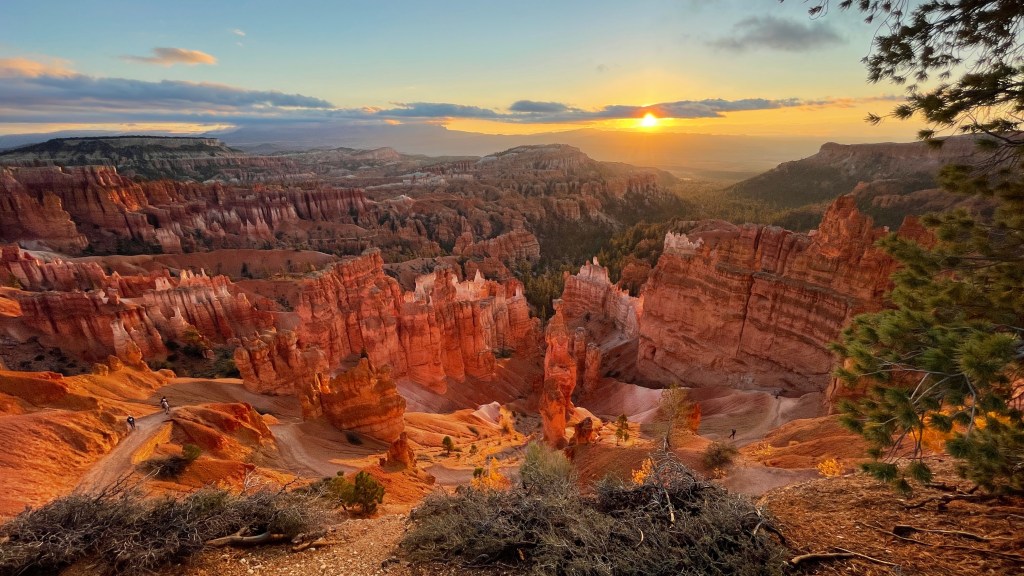
Bryce Canyon stands out because of its unique rock formations known as hoodoos. Unlike other parks, the main views are from the rim looking down into the canyon. Summer is a great time to visit, with warm days and cooler temperatures due to higher elevation.
How to Get There
- Fly into Las Vegas (LAS) or Salt Lake City (SLC)
- 4 to 5 hour drive depending on location
- Stay in Bryce Canyon City or nearby areas
Top Hikes
Easy:
- Sunset to Sunrise Point
- Distance: 1 mile round trip
- Elevation: minimal
- Easy walk along the rim with multiple viewpoints
- Queens Garden Trail
- Distance: 1.8 miles round trip
- Elevation: 450 ft
- One of the easiest ways to hike down into the hoodoos
Moderate:
- Navajo Loop Trail
- Distance: 3 miles round trip
- Elevation: 550 ft
- Includes Wall Street section with switchbacks
- Peekaboo Loop
- Distance: 5 miles
- Elevation: 1,500 ft
- Loop through hoodoos with fewer crowds
Hard:
- Fairyland Loop
- Distance: 8 miles
- Elevation: 1,700 ft
- Longer loop with unique formations and fewer people
- Under-the-Rim Trail
- Distance: up to 23 miles
- Elevation: 4,400 ft
- Multi-day or long-distance option through the canyon
Things to Do Outside of Hiking
- Sunrise and sunset viewpoints
- Scenic drive along the rim
- Stargazing in one of the darkest sky parks
- Ranger-led programs
How to Prepare and What to Pack
- Layers for cooler mornings and evenings
- Comfortable hiking shoes
- Water and snacks
- Sun protection due to high elevation
- Camera for unique landscapes
Fun Fact
Bryce Canyon is not actually a canyon, but a series of natural amphitheaters formed by erosion.
Final Thoughts
Each of these parks offers something completely different, which is what makes exploring national parks so fun. Summer is the best time for access, but planning ahead is key.
If you’re deciding where to go, think about the experience you want, mountains, desert, coastal, or something unique, and plan from there.