
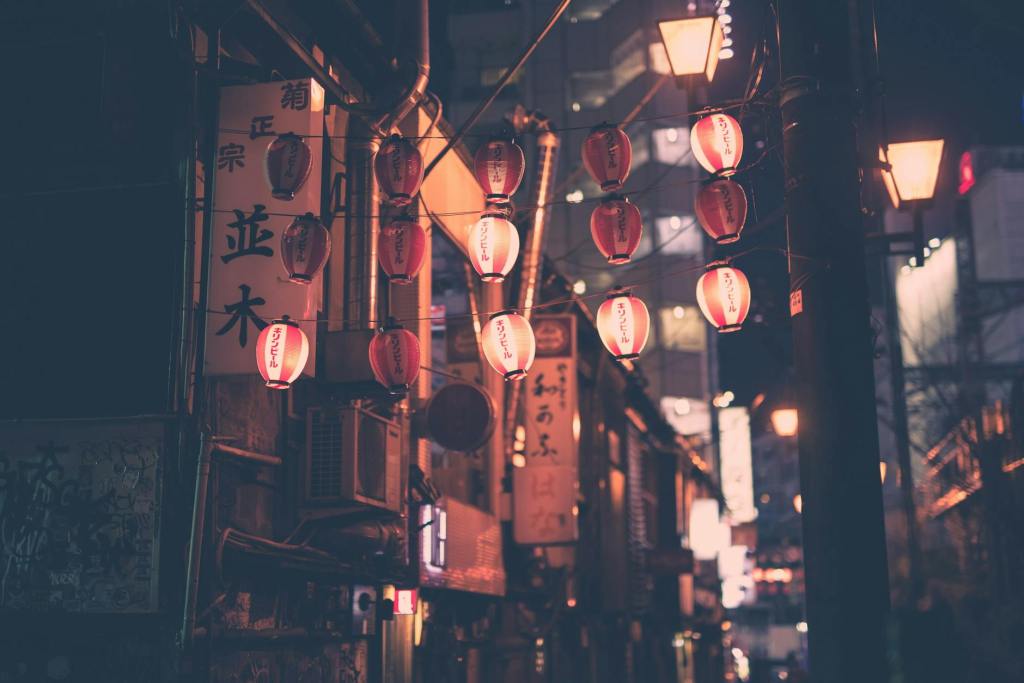
As you journey through the vibrant streets of Japan, embracing its rich culture and traditions, it’s essential to acquaint yourself with a few key aspects of Japanese etiquette, laws/rules, and safety measures. While some of these customs may not be obligatory for tourists, they offer invaluable insights into the local way of life and can enhance your overall experience in this captivating country. From bowing respectfully when greeting others to observing designated smoking areas and disposing of trash responsibly, embracing these cultural nuances demonstrates a genuine respect for the Japanese culture and its people. So, why not give it a try? Immerse yourself in the beauty of Japanese customs and traditions, and embark on a journey of cultural discovery as you explore this fascinating land.
Common Japanese terms:
- Konnichiwa (こんにちは) – Hello / Good afternoon
- Arigatou (ありがとう) – Thank you
- Sumimasen (すみません) – Excuse me / I’m sorry
- Ohayou gozaimasu (おはようございます) – Good morning
- Hai (はい) – Yes
- Iie (いいえ) – No
- Onegaishimasu (お願いします) – Please / I beg you
- Gomen nasai (ごめんなさい) – I’m sorry (more formal)
- Sayounara (さようなら) – Goodbye
- Oishii (美味しい) – Delicious
- Kawaii (かわいい) – Cute
- Konbanwa (こんばんは) – Good evening
- Hai, wakarimashita (はい、わかりました) – Yes, I understand
- Domo arigatou gozaimasu (どうもありがとうございます) – Thank you very much (more formal)
- Hajimemashite (はじめまして) – Nice to meet you
Laws and Rules:
- Observe designated smoking areas and avoid smoking in prohibited areas, such as indoor spaces, public parks, and sidewalks in certain districts.
- Dispose of trash responsibly by separating recyclables from general waste and following local recycling guidelines.
- Respect traffic laws, including pedestrian signals and designated crossing areas.
- Adhere to photography restrictions in sensitive areas such as train stations, airports, and government buildings, where photography may be prohibited or restricted.
Safety Measures:
- Stay vigilant and aware of your surroundings, especially in crowded areas such as train stations and tourist attractions, to avoid potential pickpocketing or scams.
- Use designated pedestrian crossings and obey traffic signals when crossing streets or railroad tracks to minimize the risk of accidents.
- Stay hydrated and carry a map or mobile phone with GPS capabilities to navigate landscape effectively.
- In case of emergencies, familiarize yourself with emergency contact numbers and seek assistance from nearby police stations or information centers.
- Police: Dial 110 for emergencies requiring police assistance, such as accidents, theft, or criminal activities.
- Fire and Ambulance: Dial 119 for emergencies requiring fire response or medical assistance, including accidents, injuries, or medical emergencies.
General Etiquette:
- Practice common courtesy, such as bowing when greeting others and using polite language (keigo) when interacting with locals.
- Avoid eating or drinking while walking in public and or transportation, as it’s considered impolite. Instead, find a designated area such as a park bench or food stall to enjoy your meal.
- Refrain from speaking loudly or engaging in disruptive behavior in public to maintain a peaceful atmosphere.
- Refrain from taking photos of geisha or maiko without their permission, as it is considered invasive and disrespectful.
- Avoid pointing or gesturing with your fingers, as it is considered impolite in Japanese culture. Instead, use an open hand or nod to indicate direction or agreement.
- Always remove your shoes before entering traditional Japanese establishments, including ryokans (inns), temples, and some restaurants.
Transit and Navigating Etiquette

- It’s customary for pedestrians to walk on the left side of the sidewalks and pathways, aligning with the flow of traffic. When navigating the bustling thoroughfares of Japan, adhering to the left side can minimize the likelihood of collisions and ensure smoother pedestrian movement.
- When using escalators, it’s customary to stand on the left side, except in Osaka, where standing on the right side is the norm.
- Practice patience and wait for others to embark or disembark before boarding trains or buses, and offer your seat to the elderly, pregnant women, or those with disabilities.
- While on the Trains
- Queueing: When waiting to board the train, form a neat and orderly queue. Respect the designated boarding lines and wait for passengers to disembark before entering the train.
- Priority Seats: Priority seats are reserved for elderly passengers, pregnant women, individuals with disabilities, and those traveling with small children. If you are seated in a priority seat and someone who qualifies boards the train, offer your seat to them.
- Quiet Carriages: Some train cars designate specific areas as “quiet carriages” where passengers are expected to refrain from talking loudly, using mobile phones, or engaging in other disruptive behavior. Respect these rules to maintain a peaceful atmosphere for fellow passengers.
- Mobile Phones: Use of mobile phones on trains is generally discouraged, especially in crowded cars or during peak hours. If you need to make or receive a call, move to the designated areas near the doors or exit the train car.
- Reserved Seating: If you are traveling in a car with reserved seating, ensure that you sit in the correct seat assigned to you on your ticket. Avoid occupying seats that are marked as reserved for other passengers.
- Personal Space: Be mindful of personal space and avoid leaning against or crowding other passengers. Keep belongings close to you to avoid inconveniencing others or blocking pathways.
- Eating and Drinking: While it is generally acceptable to eat and drink on trains in Japan, be considerate of others and avoid consuming strong-smelling or messy foods. Dispose of any wrappers or containers properly after you finish.
- Exiting the Train: When reaching your destination, prepare to exit the train by gathering your belongings in advance. Move towards the doors and allow passengers to disembark before entering or exiting the train.
- Offering Assistance: If you notice someone struggling with luggage or needing assistance, offer to help if you are able to do so. Acts of kindness and consideration are appreciated on crowded trains.
- Keep Noise to a Minimum: Conversations should be kept at a low volume, and headphone volume should be adjusted to prevent sound leakage. Respect the quiet environment and refrain from playing music or watching videos without headphones.
Restaurant Etiquette
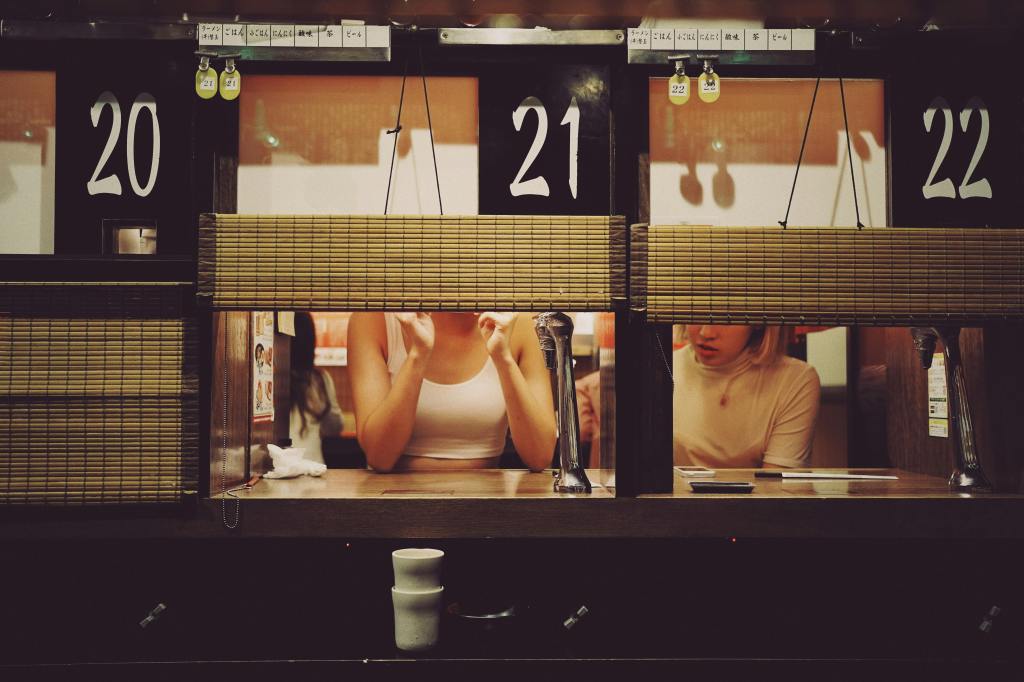
Restaurant etiquette and paying in Japan adhere to certain customs and traditions.
- Entering the Restaurant: Upon entering a restaurant, wait to be seated by the staff rather than choosing your own table. If the restaurant has a vestibule, remove your shoes and place them in the designated area before entering the dining area.
- Seating Arrangements: In traditional Japanese restaurants, you may be seated on tatami mats or at low tables. If you’re uncomfortable sitting on the floor, some establishments offer Western-style seating options. Wait for the staff to guide you to your seat.
- Ordering Food: In many restaurants, you’ll find vending machines near the entrance or at the table where you can purchase meal tickets before being seated. Alternatively, a server may take your order at the table. Be prepared to order promptly and avoid lingering over the menu.
- Table Manners: When eating, use chopsticks to pick up food and refrain from sticking them upright in a bowl of rice, as this resembles a funeral ritual. It’s also considered polite to lift bowls to your mouth when eating rice or soup. Slurping noodles is acceptable and even seen as a sign of enjoying the meal.
- Chopstick Ettiquete
- Placement: Keep your chopsticks on the table when not in use, or use a rest if available. Avoid sticking them upright in food.
- Passing Food: Use separate chopsticks or designated serving chopsticks to share food. Don’t pass food directly from your chopsticks to someone else’s.
- Handling Food: Use chopsticks to pick up food gently. Take only what you can eat in one bite from shared dishes.
- Use of Rests: Use a chopstick rest if provided, or fold the paper wrapper into a makeshift rest.
- Do Not Point: Avoid using chopsticks to point at things.
- Do Not Play: Don’t tap chopsticks on bowls or play with them.
- Avoid Cross-Contamination: Use different ends of the chopsticks or turn them over when eating from communal dishes.
- Chopstick Ettiquete
- Paying the Bill: In Japan, it’s customary to ask for the bill by making a gesture resembling writing in the air with your hand. You can say “Okaikei onegaishimasu” (お会計お願いします), which means “Check, please.” Alternatively, the server may bring the bill to your table automatically.
- Payment Process: When receiving the bill, take it to the cashier or pay at the table if the server brings a portable card reader. If paying by cash, place the money in the provided tray rather than handing it directly to the server. Credit cards are widely accepted, but it’s always a good idea to carry some cash for smaller establishments or rural areas.
- Tipping: Tipping is not customary in Japan and may even be refused. Exceptional service is already included in the price, so there’s no need to leave additional gratuity. Simply express your gratitude with a polite “Arigato gozaimasu” (ありがとうございます) as you leave.
Shrine Etiquette
- Show reverence when visiting temples and shrines by bowing before entering and refraining from loud conversation or disruptive behavior.
- When bowing, follow these steps for a respectful gesture:
- Stand Straight: Keep your back straight and your feet together.
- Bend at the Waist: Lower your upper body forward from the waist while keeping your back straight. The angle of the bow can vary depending on the formality of the occasion, but a slight bow is generally appropriate for casual visits.
- Keep Hands at Your Sides: Let your arms hang naturally by your sides or place your hands together in front of you, palms facing down.
- Hold the Bow Briefly: Hold the bow for a moment before straightening up.
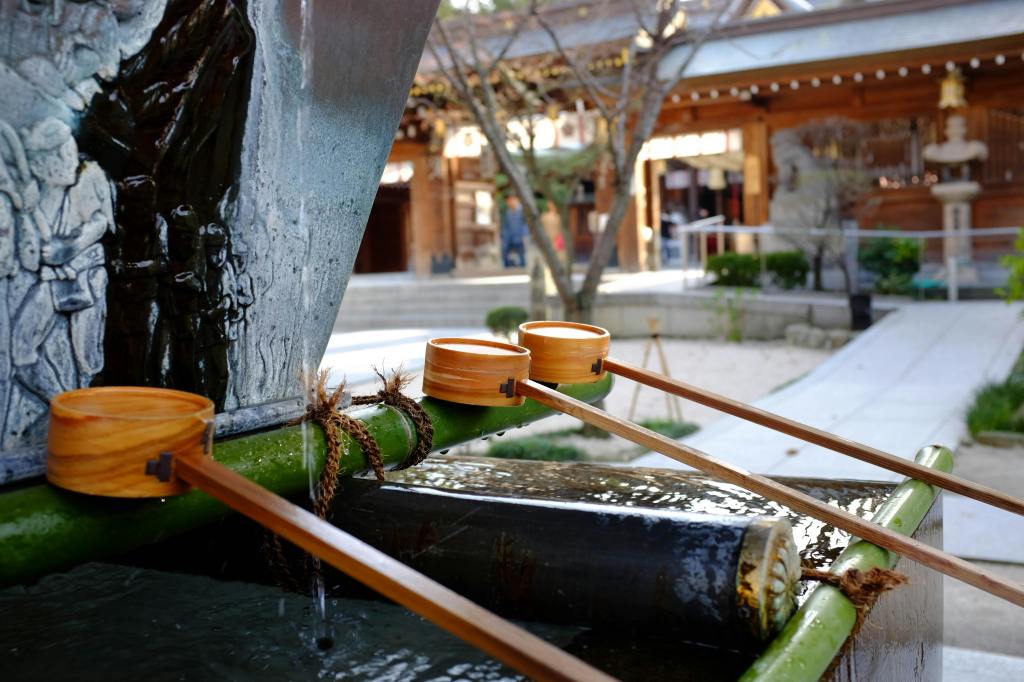
- When purifying yourself at the temizuya (water basin):
- Take the Ladle: Approach the temizuya respectfully and take the ladle with your right hand.
- Pour Water: Use the ladle to scoop water with your right hand and pour it over your left hand to rinse it. Then switch hands and repeat, rinsing your right hand with water poured from your left hand.
- Rinse Your Mouth: Pour a small amount of water into your left hand and use it to rinse your mouth. Be sure not to drink directly from the ladle; instead, use your hand to scoop the water into your mouth and spit it out beside the temizuya.
- Return the Ladle: After purifying yourself, return the ladle to its original position for the next visitor to use.
- When making an offering at a shrine in Japan, it’s important to follow proper etiquette to show respect and reverence.
- Approach the Offering Box: Locate the offering box (saisen-bako) near the entrance of the shrine. It’s usually a wooden box with an opening at the top for placing offerings.
- Prepare Your Offering: Traditional offerings include coins or bills (usually ¥5 or ¥50 coins) as a monetary donation. You can also offer small items such as food, fruits, or flowers. If you’re offering money, it’s customary to place it in an envelope called an osaisen-bukuro.
- Bow Respectfully: Before making your offering, bow respectfully toward the shrine as a gesture of reverence.
- Place Your Offering: If you’re offering money, insert the envelope or coins through the slot in the offering box. If you’re offering food or other items, place them carefully in front of the offering box or on a designated offering table if provided.
- Say a Prayer: After making your offering, take a moment to say a prayer or express your wishes silently. You can also clap your hands together (usually twice) to get the attention of the deity or spirits and then bow again as a sign of respect.
- Thank the Deity: Before leaving the shrine, bow once more to express gratitude to the deity or spirits for receiving your offering.
- When bowing, follow these steps for a respectful gesture:
Name Etiquette

- Addressing Others:
- Use honorific titles such as “san” (さん) after someone’s name, especially when speaking to or about someone you’re not familiar with. For example, “Tanaka-san” is a polite way to address Mr. Tanaka.
- Refrain from addressing someone by their first name unless given explicit permission or if they are a close friend or family member.
- Introducing Yourself:
- When introducing yourself, state your family name first followed by your given name. For example, “Tanaka Taro” where Tanaka is the family name and Taro is the given name.
- Use a polite form of self-introduction such as “Hajimemashite” (はじめまして) meaning “Nice to meet you.”
- Using Titles and Suffixes:
- Address individuals with appropriate titles based on their status or occupation, such as “sensei” (先生) for teachers, “shacho” (社長) for company presidents, or “sensei” for doctors.
- When referring to someone else’s family members, use honorifics such as “okasan” (お母さん) for mother and “otousan” (お父さん) for father.
- Other Titles
- San (さん): A general honorific suffix used to address individuals politely, regardless of gender or social status. For example, Tanaka-san is a polite way to address Mr. or Ms. Tanaka.
- Sensei (先生): Typically used to address teachers, professors, doctors, and other professionals. It conveys respect for their expertise and knowledge.
- Shacho (社長): Refers to the president or CEO of a company. It is used to address someone in a leadership or managerial position.
- Senpai (先輩) and Kohai (後輩): Senpai is used to address someone who is senior or has more experience, while kohai refers to someone who is junior or less experienced. These terms are commonly used in schools, workplaces, and social settings.
- -chan (ちゃん): A diminutive suffix used to express affection or familiarity, often used with children, close friends, or pets. For example, Tanaka-chan would be used to address a close friend named Tanaka.
- -sama (様): A respectful suffix used to address someone with great esteem or reverence. It is more formal than “san” and is often used in business or formal contexts.
- -kun (くん) and -chan (ちゃん): These suffixes are typically used to address young boys and girls, respectively. However, -kun can also be used between close friends or colleagues of the same age or status.
- -shi (氏): A formal suffix used in written correspondence or formal contexts to address someone in a respectful manner, similar to “Mr.” or “Ms.” in English.
- Business Card Exchange:
- When exchanging business cards (known as “meishi” in Japanese), present and receive them with both hands as a sign of respect.
- Take a moment to examine the card before carefully storing it in a cardholder or pocket rather than immediately putting it away.
Conclusion:
Exploring Japan’s diverse cities and natural wonders is an enriching experience that offers insights into the country’s rich culture, history, and traditions. By adhering to local etiquette, laws, rules, and safety measures, visitors can navigate each destination respectfully while enjoying all that Japan has to offer. Whether strolling through Tokyo’s bustling streets, admiring Kyoto’s historic temples, or hiking through the scenic landscapes of the Kii Peninsula, every moment in Japan promises to be unforgettable.
Remember to approach each encounter with an open mind and a spirit of curiosity, and you’ll be rewarded with unforgettable experiences and lasting memories of your journey through the Land of the Rising Sun. Safe travels!



 Travel Raven